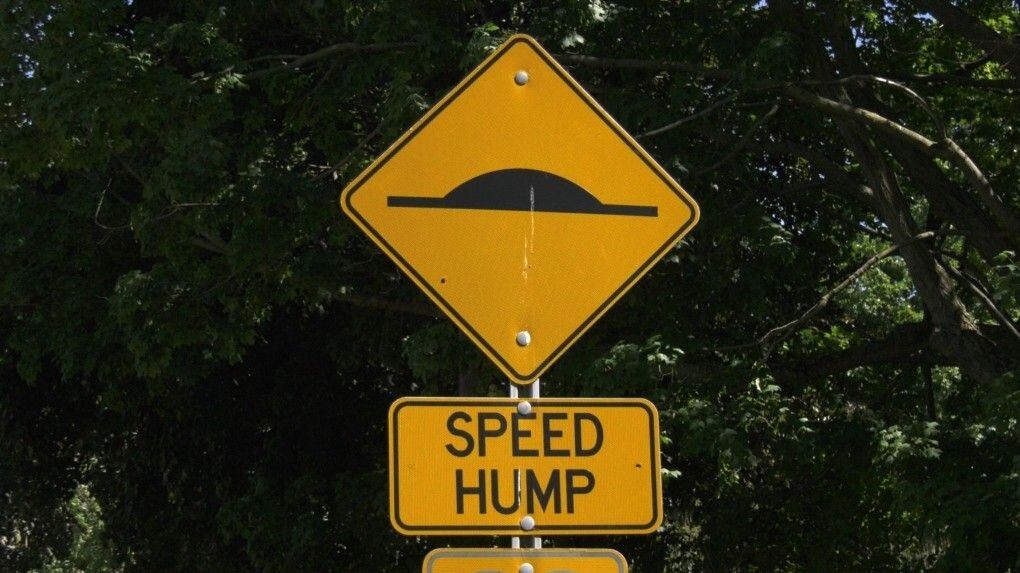
Windsor city council will discuss potentially making updates to their Traffic Calming Policy after a committee gave it a nod of approval.
Last week, the city's Environment, Transportation and Public Safety Standing Committee was presented a report by administration recommending to update the current policy, which hasn't been updated since 2022.
The report stated that the average number of traffic calming requests has significantly increased over the last 10 years. The average number of requests was about 90 per year between 2015 and 2019, however that jumped to 374 per year between 2021 and 2025.
Administration stated that due to the rise in requests that the policy should be updated to include a data-driven approach for consistent decision-making on whether a road should be granted traffic calming initiatives.
Currently, residents who request traffic calming initiatives - typically a speed bump - have to go through a process. The process includes a speed analysis of the road, signatures needed from nearby homes, public engagement which includes a survey that requires 51% support from nearby residents before it can be officially approved by the city.
The report also states that between 2022 and now, 66 per cent of the installed speed humps and other traffic calming measures didn't meet the warranted criteria - resulting in approximately $577,000 being spent on "unnecessary installations".
Kieran McKenzie, ward 9 city councillor and chair of the committee, says he's concerned with administration calling these safety measures "unnecessary".
"There isn't a place where I think that speed humps have gone in where it hasn't made it safer. And if that's ultimately the goal, there's no way to say that, despite the terminology, that they were unwarranted. If that road now is safer because of the infrastructure that's been gone in for traffic calming... then it's warranted."
He believes the current process where residents are responsible for getting support may change.
"That in and of itself led to a certain amount of applications going forward, I think we had a total of 10 to 15 per cent of the total number of applications that were brought to the city through the process actually had a project go forward as a result of it. So even there in that part of it, that's an area where I think it certainly merits some review."
McKenzie says the speed cameras that were set to be installed would've added safety in the city but the Doug Ford government voted to get rid of them.
"That I think has made the community less safe because of the elimination of the automatic speed enforcement cameras as a tool, but we're going to carry on despite what the province is doing, and despite their bad decisions, we're going to do everything that we can as a council to make our neighbourhood safer."
According to city administration, approval of an updated policy would lower funding needs to about $620,000 for 25 speed humps and other measures.
The updated policy also suggests reallocating $300,000 intended for temporary measures in 2026 and 2027 to support only "warranted" traffic calming initiatives based on the new guidelines.
If this policy is rejected when it goes to city council, administration estimates the need for approximately $1.5-million to install around 73 speed humps and other traffic calming measures in response to service requests received to date.
The report will go to city council in the new year for final approval.