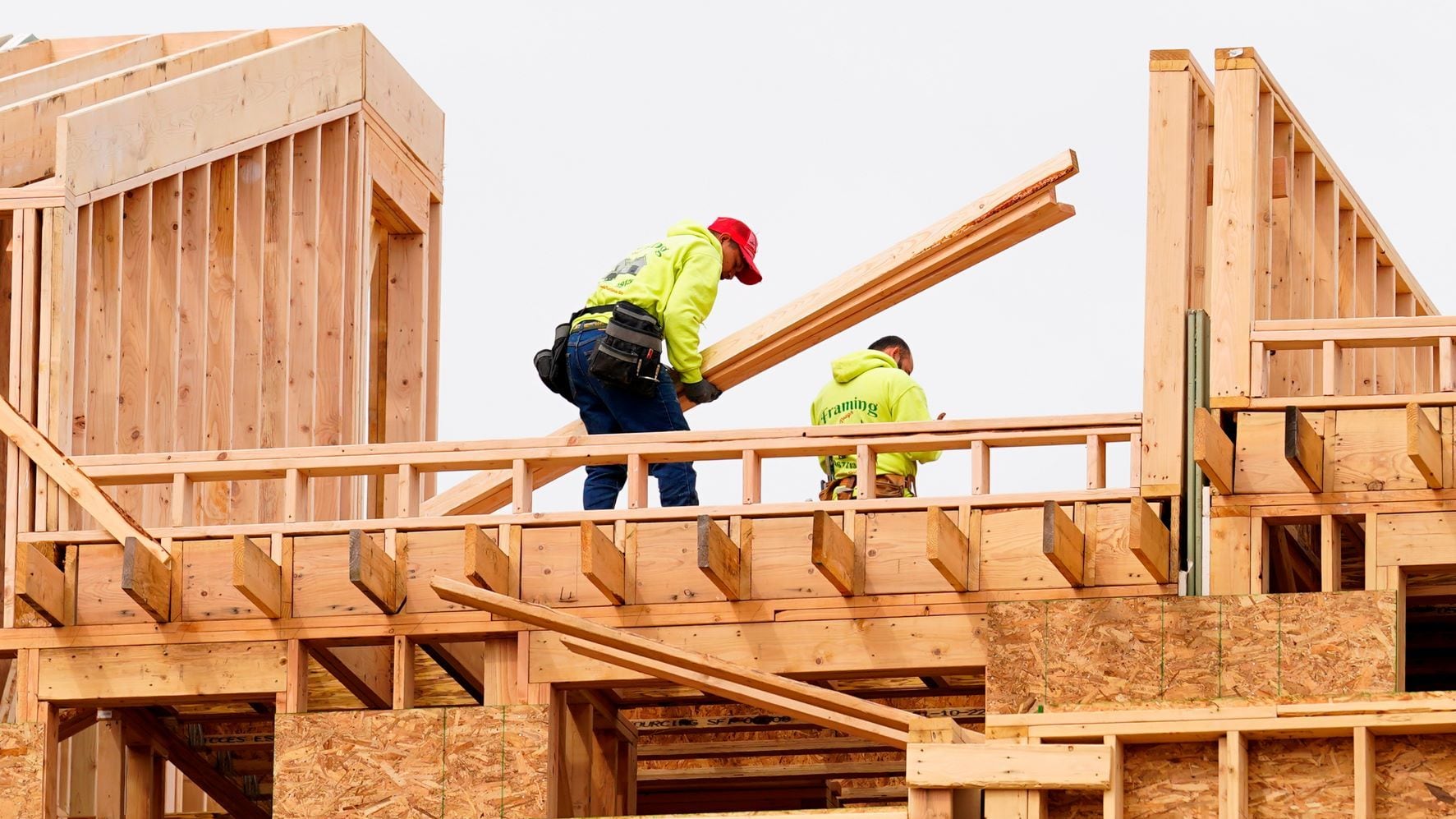
The Municipality of Lakeshore continues to make strides with its Housing Accelerator Fund initiatives.
Council held a lengthy meeting Tuesday evening where they discussed and approved several reports and initiatives related to housing and fulfilling Lakeshore's commitments under the $7.4-million HAF grant.
Council approved the Lakeshore Community Improvement Plan (CIP) to boost housing supply, support rural development and main street revitalization, cut planning costs, and enhance accessibility and aesthetics.
The 2025 Affordable Housing Strategy was also approved to address the housing needs of Lakeshore residents. A Pattern Book will be added to Lakeshore's Development Manual, offering pre-approved housing designs to speed up home building permit approvals while ensuring neighbourhood compatibility.
Lastly, council received a summary report from the Lakeshore Horizons team on community engagement initiatives that have occurred such as three public information sessions to hear from residents. More engagement opportunities will be available in the future.
Tyson Cragg, Chief Administrative Officer for the Municipality of Lakeshore, says these initiatives are steps in the right direction to addressing the housing crisis.
"Also making it easier for developers and for home buyers, or people looking for housing, to get access to that. We've got goals under the Housing Accelerator Fund to build about 900 units over the next three years during the term of that program, and the whole purpose of the Accelerator Fund is to provide those incentives to get the builders and developers to get shovels in the ground to get houses built."
He says the four units as-of-right has been endorsed in principle by council with plans to amend the Official Plan in 2026.
"For any of the federal programs that is a requirement, and through the public consultation process that we've done, part of it is really getting residents to understand what this means. It doesn't mean there's going to be fourplexes on every corner, it doesn't mean there's going to be high-rises on every corner, it really is just a gentle densification where it makes sense to do so."
Cragg says the Pattern Book is a crucial initiative in this process.
"It gives you basically off-the-shelf designs, and they're not one size fits all, they're not necessarily cookie cutter, but if you're a builder that comes along, you're not looking at having to start from scratch on the design. You can choose from a Pattern Book, a book of designs that are already approved, they're good to go essentially. So it makes that getting the shovel in the ground, and getting the homes built faster."
In February 2025, Lakeshore received approval for the $7.4-million in funding from the Canada Mortgage and Housing Corporation (CMHC) over four years under the HAF program.
Cragg says 25 per cent of the $7-million has already been distributed to the municipality to help them approve the nine initiatives.
The municipality is required to meet its housing supply growth target of 898 new units by Q1 of 2028.
Earlier this year, Lakeshore partnered with the Centre for Cities (C4C) at the University of Windsor's Faculty of Law and signed an official Memorandum of Understanding (MOU). This partnership sees the university aid the municipality through the planning and development process.