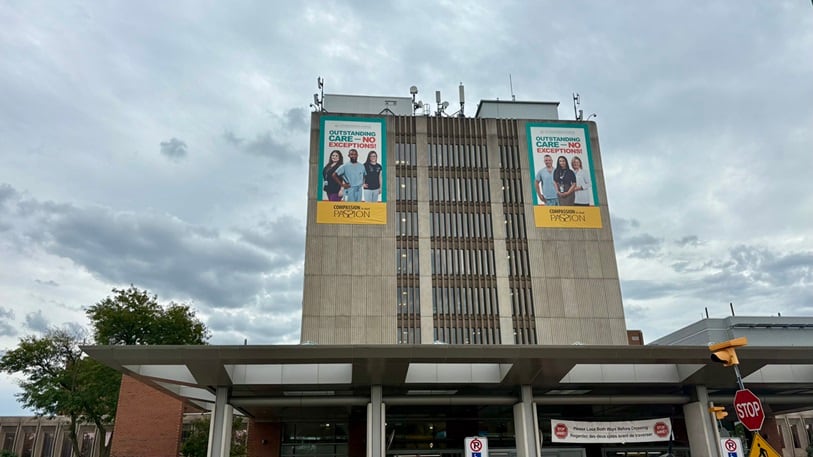
Windsor Regional Hospital continues to make improvements as it works towards eliminating its operating deficit.
The hospital is now projecting a $14.5-million deficit for the current fiscal year, down from a projected a $20-million deficit in early April.
The hospital has identified millions of dollars in cost avoidance opportunities through tighter financial controls, eliminating non-essential spending and reviewing how money is being spent across the organization.
While there have been improvements, staffing pressures remain. Overtime among unionized staff is above the hospital’s four per cent target. At the end of July, overtime at the Met campus stood at 4.5 per cent, down from 5.4 per cent in January. At the Ouellette campus, overtime was 6.8 per cent, an improvement from 7.3 per cent in January.
The hospital also continues to deal with significant capacity pressures. Windsor Regional has 433 funded medical and surgical beds, which would account for nearly 56,300 patient days - about 3,480 additional days beyond its funded capacity.
Kristin Kennedy, President and CEO of Windsor Regional Hospital and Erie Shores HealthCare, says they’re seeing definite improvements from the earlier projected numbers.
“Definitely some quick wins and good opportunity for some further improvement with growth of programs and services and really looking at improving our wait times in our ER and our OR which will generate some revenue for the organization as well. Hopefully over the next couple of months we’ll have some additional updates on how we get to the end of a balanced budget.”
She says the review has been extensive across the entire organization.
“We’ve been able to look at some of the efficiencies and cost savings from cost avoidance and how can we do better at our checks and balances and ability to really reel in where we’re spending money, looking at optimization of supplies across the organization, overtime, straight time, utilization of our staffing models as well.”
Kennedy says per the ministry, the hospital needs to balance its budget by the end of the 2027-28 fiscal year.
“We have a little bit of time left to really look at what other opportunities there may be and trying to balance that with investments in the organization as well. As a new CEO coming in and a new set of eyes, there are always opportunity and needs to invest in physicians and staff. And so the board and myself are taking that serious.”
The next phase includes improving emergency room and operating room performances, reviewing staffing models and looking for additional funding and revenue opportunities.
The current fiscal year is from April 1, 2026, until March 31, 2027.