WARNING: This article contains details that some readers may find disturbing.
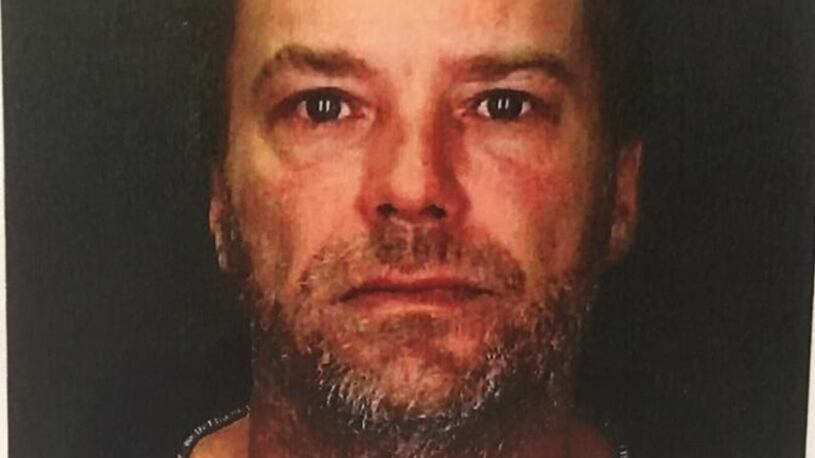
John Wayne Pierre, now 56 years old, pleaded guilty to second-degree murder Friday even though he was eligible for a retrial.
It’s an unexpected turn of events in a case that includes a jury conviction, a successful appeal, and a new trial.
The Murder
Lesley Watterworth, 42, suffered 69 sharp force injuries on November 1, 2016, inside her Curry Avenue home.
Neighbours heard a commotion that day and Pierre refused to let them see her.
Court would learn, he later went out - in clothes covered in blood - to three Windsor establishments including the casino, where he ate a meal he couldn’t pay for.
“If you give me a drink, and a smoke I will show you where the body is,” Pierre told Windsor Police, according to prosecutors.
The Conviction
At the two-week trial in 2018, Pierre admitted he and Watterworth were on a “three-day bender” on Nov. 1, 2016.
The day of her murder, Pierre admitted he believed she had been unfaithful while he was at Brentwood Recovery Home for addiction treatment, which “caused him to erupt into a rage, according to Crown Attorney Eric Costaris.
“During which he launched a frenzied attack on her, using a knife that was on the stove,” Costaris said Friday. “Ms. Watterworth was unarmed and posed no danger to Mr. Pierre.”
A jury of Windsor-Essex residents convicted Pierre to second-degree murder in September 2018.
He was subsequently sentenced to life in prison with no chance of parole for 15 years.
The Appeal
Pierre’s appellate lawyers successfully argued Justice Renee Pomerance made a mistake in a small portion of her charge to the Windsor-Essex jury.
The Ontario Court of Appeal found she didn’t warn them about placing too much weight on Pierre’s post-offence conduct.
Pierre was granted a retrial in August 2025.
The Plea
Defence lawyer Ken Marley represented Pierre at the trial but not the appeal.
He was also uninvolved in Pierre’s initial discussions with the court about a retrial.
Marley told Justice Bruce Thomas Friday he was retained not long ago, by way of a letter.
“It was unexpected,” Marley said. “It was clearly, as I described for Court, a remorseful expression on Mr. Pierre's part and a desire to avoid having to go through a trial again for the sake of Ms. Watterworth’s family and for his own sake.”
When asked why Pierre didn’t plead guilty in 2018, Marley said the case and his client were different back then.
“We had, we thought, very compelling evidence that this was manslaughter, not murder, and so that's why we approach that trial in that way,” Marley said.
Marley called Friday’s plea an “honourable” and “amazing” thing to do, given how difficult a retrial would be for the crown ten years after the fact.
“With the passage of time, witnesses’ memories fade, some witnesses may no longer be available at all, and the reliability and completeness of the evidence can be affected in ways no one can fully control,” Costaris conceded Friday in a written statement to CTV News.
“The guilty plea brings finality to a case that has spanned many years, ensures accountability, and protects public safety through the continued imposition of a life sentence,” Costaris concluded.
“In my view, his plea in the face of the Crown having to try and put this case together again ten years later? That's an amazing demonstration of remorse,” Marley said.
“I don't think anyone should cynically look at what happened here.”
The sentence
A guilty plea to second-degree murder carries an automatic sentence of life in prison.
Costaris asked Justice Thomas for 10 to 12 years parole ineligibility; Marley asked for 10 years.
Justice Bruce Thomas told the court in all his retrial scheduling hearings Pierre always asked the court when the matter could be concluded.
He calculated Pierre has already been in custody for nine years, 275 days since his arrest on Nov. 2, 2016.
The judge characterizes Pierre’s plea as “meaningful”.
“Crown witnesses may have been lost. Memories can become clouded. A second trial, ordered a decade after the offence, imposes some critical difficulties on the prosecution. Difficulties not of its making,” Justice Thomas said.
“Despite that, Mr. Pierre entered a guilty plea to the same offence of second-degree murder, and he seems as well to have used his time while incarcerated wisely.”
Pierre is now in a minimum-security facility.
Justice Thomas reflected however on the aggravating features in the case, which he described as “a brutal domestic homicide,” where the victim was “left for dead”, and Pierre’s conduct afterwards in “calling off” the concern of neighbours who might have been able to save Lesley Watterworth.
The judge decided to reduce to Pierre’s parole ineligibility down to ten years, describing it as “a practical approach that captures concerns for the community, the family interests, a heavily burdened trial court and a highly motivated, remorseful offender.”.
It means Pierre can apply for parole as of Nov. 2, 2026, if he chooses.
“It’s completely up to the Parole Board of Canada (PBC),” Marley said.
Costaris reiterated saying the PBC will have “a full and detailed evidentiary record” should Pierre ever apply.
“That record will include the facts he admitted in his guilty plea today, as well as the extensive body of evidence gathered through a thorough and professional police investigation,” Costaris said.