Students at the University of Windsor are joining a province-wide push to have the Ford government reverse changes to Ontario’s student financial assistance program, saying the shift toward loans is making post-secondary education increasingly difficult to afford.
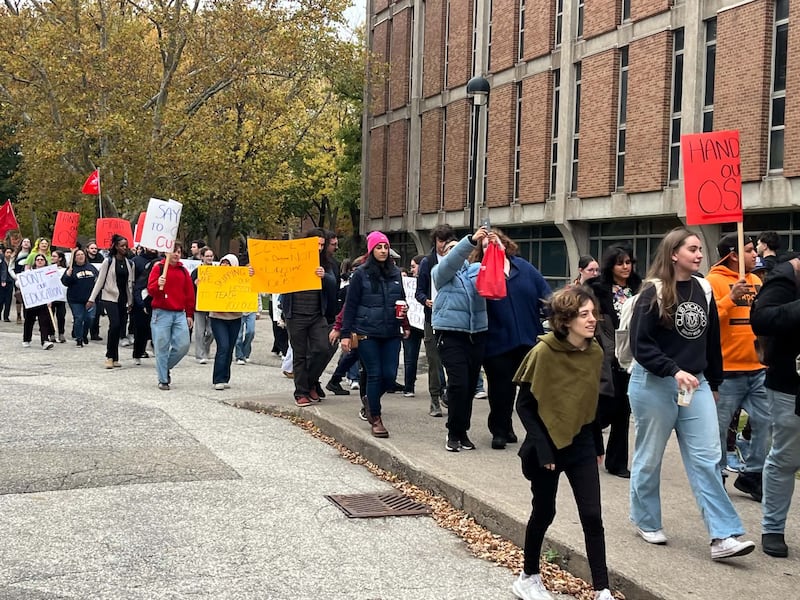
Students walked out of classes Thursday as part of a Day of Action organized by the Canadian Federation of Students-Ontario and student unions at more than 15 campuses across the province.
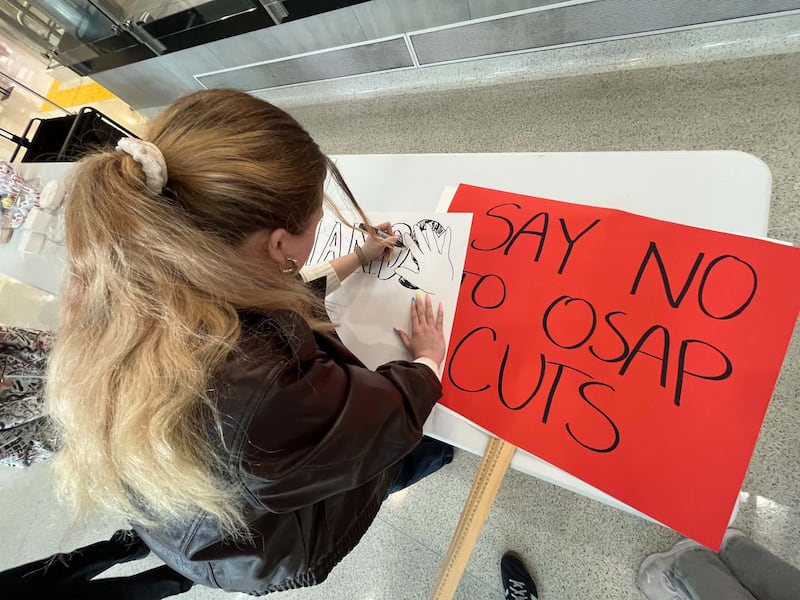
The demonstration, organized locally by the University of Windsor Students’ Alliance (UWSA), included a rally on campus calling for greater investment in post-secondary education and a reversal of changes to the Ontario Student Assistance Program (OSAP).
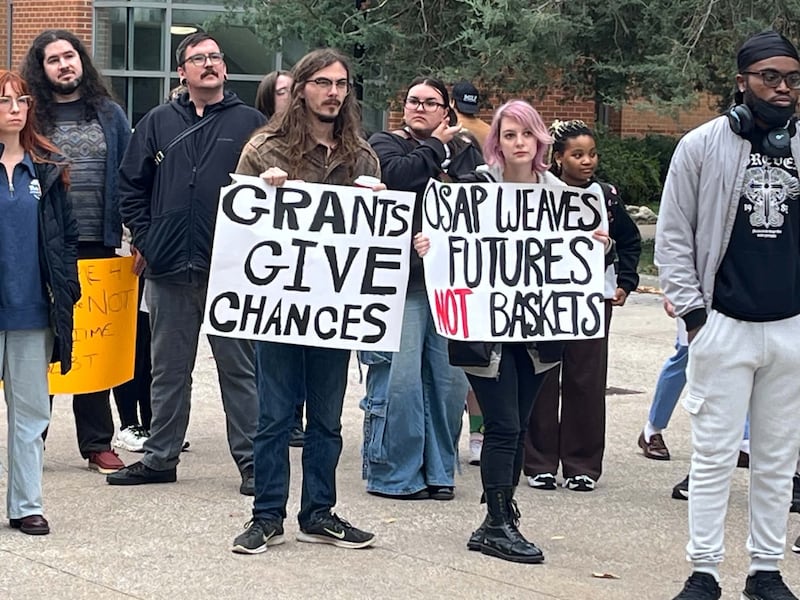
Under the new funding formula, which took effect Aug. 1, students can receive a maximum of 25 per cent of their provincial OSAP funding in grants, down from as much as 85 per cent under the previous system. The remaining funding is provided through loans that must be repaid.
The province has also ended its tuition freeze, allowing publicly funded colleges and universities to increase tuition by up to two per cent annually for the next three years.
For first-year biomedical sciences student Mehraan Khan, the changes are coming at a difficult time for students already trying to balance the cost of living with their academic responsibilities.
Khan says he works part-time while attending university, as do many of his friends, but the additional financial pressures mean less time available for studying.
“I know me, I work a part-time job, a lot of my friends work part-time jobs as well,” Khan said.
“It’s kind of the consensus among my friends that they have to sacrifice crucial academic hours that they could be spending studying and preparing for all these midterms and exams, but they have to spend that time working.”
He said the province’s high cost of living, combined with reduced financial assistance, is particularly concerning for students from lower and middle-income families.
“These grants were really the lifeblood for students that were in middle or lower-class income families looking to attend higher education,” Khan said.
“These grants are really what allowed them to be in that place. And those are the exact people that these cuts hurt the most.”
Khan said while the changes affect students differently, he is concerned about the impact on those who rely heavily on OSAP to pursue their education.
UWSA president Victorieuse Sambao says the uncertainty surrounding student funding is leaving many questioning whether they can afford to continue their education.
“Students are wondering whether or not they want to keep going with their education,” Sambao explained.
She said even as someone who has applied to law school, she is concerned about how she will manage her student debt and future education costs.
“I just applied to law school, and I don’t know how I’m going to pay off my loans, because now I don’t know how that funding is going to work,” she said.
Sambao stated that the concerns extend beyond students currently enrolled in university, adding the changes could also discourage former students from returning to school.
The UWSA is calling on the provincial government to consult with students and universities and take action to reverse the funding formula.
“The Ontario government should consult with its students. The Ontario government should consult with its universities,” Sambao said.
“And when I say consult, it means action afterwards. We don’t want inactivity. We want to see our OSAP be our OSAP and that includes reversing that formula.”
She said the student alliance is doing what it can to help those facing financial challenges, including establishing a scholarship pool that will be distributed during the second semester.
However, Sambao said student unions can only do so much without changes at the provincial level.
Vice-president of student advocacy RJ D’Aguilar said Thursday’s walkout was an opportunity to show the government students have not forgotten about the issue.
He said organizers were pleased with the turnout, particularly given the timing of the demonstration during midterm season.
D’Aguilar also suggested the students who attended represent only a small portion of those who share their concerns.
“For every one person that’s here, there’s a thousand more that would like to be here if they weren’t under economic and academic pressures,” he said.
He said the shift from grants to loans is also affecting who can realistically pursue a university education.
“There are students who would have otherwise been attending here that are no longer able to do so because of the conversion of grants to loans,” D’Aguilar said, adding those students are not necessarily any less academically capable, but may be unable to take on the financial burden.
Fourth-year criminology and modern languages student Maria Oliveira also took part in the demonstration, saying she believes supporting education is essential to the country’s future.
“I just feel like the government should support education if they want a better future for the country,” Oliveira said.
In an emailed statement to CTV News, the University of Windsor said it respects students’ right to peacefully advocate for their positions.
“We remain focused on supporting their academic success and maintaining a safe, respectful campus environment for all,” the university said.
Students are calling on the Ford government to reconsider the OSAP changes and restore a greater grant component to student financial assistance.