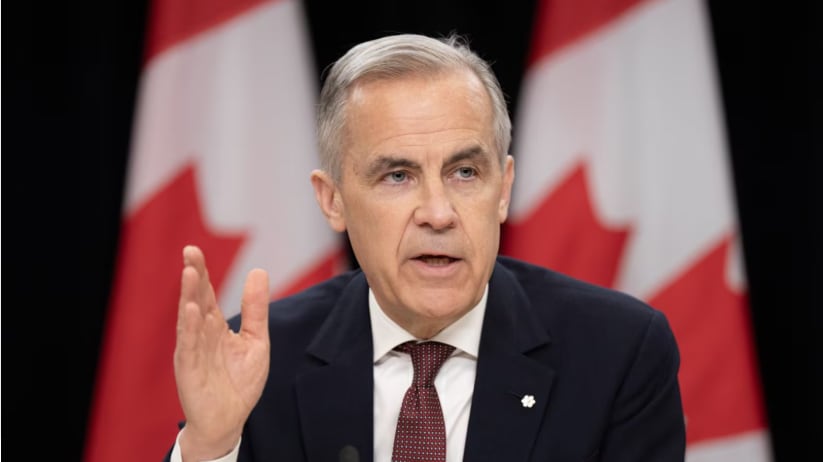
Prime Minster Mark Carney's government will table its first budget on Tuesday.
This budget is the Liberals' first fiscal update in almost a year and the first summary of Carney's agenda since the party released its spring election platform.
Lydia Miljan, political science professor at the University of Windsor, said Carney has presented the update as part of a plan to "spend less" and "invest more."
"I think most commentators, and certainly most economists, are suggesting that the budget deficit is going to be huge. So we're going to have some sticker shock there, but, simultaneously they're also going to have to put in some austerity, or some cuts, that they've also been signalling," Miljan said.
Carney has promised measures to help workers due to tariff uncertainty, leaving Miljan wondering how they would pay for it.
"Given that the Canadian government has already pulled back on imposing countervailing tariffs, it means it's going to have to come out of general revenue, rather than from the taxes raised from tariffs," she said.
The federal budget will be subject to a confidence vote once it's tabled as legislation in the House of Commons.
Losing the vote could cause the minority Liberal government it to fall.
Miljan said she doesn't think a fall election is a real risk, however she does think an election is something the Liberals would want in pursuit of a majority.
"For Carney, I think his real challenge is he's still in his honeymoon phase, so they would probably think Canadians are still going to give him a chance because we haven't even had a year to implement this policy, and so he's been doing all this statesmanlike things. So he probably thinks that he has a good chance of winning now, and that would give him more time on the back end of his mandate, he'd have the full four years," said Miljan.
The fall economic statement tabled late last year — before U.S. President Donald Trump’s trade war erupted — projected a deficit of $42.2 billion for this fiscal year.
The Institute of Fiscal Studies and Democracy predicts the deficit could now land between $75-90 billion this year, though estimates from some other analysts have put the number a little above or below that wide range.
-With files from The Canadian Press