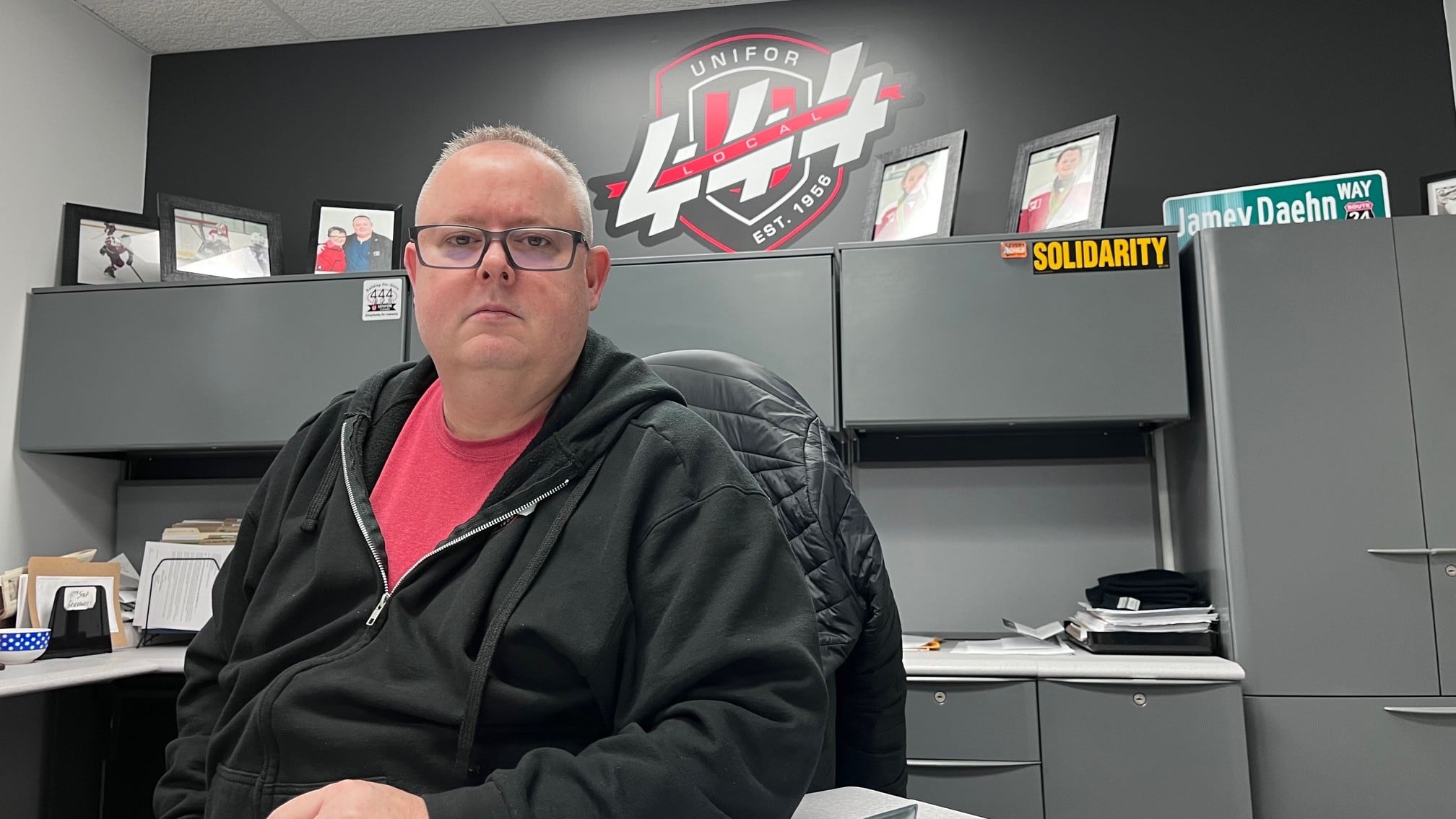
The president of Unifor Local 444 is calling tariffs being imposed by U.S. President Donald Trump a 'tough and scary day for Canada.'
James Stewart says they are now facing some significant challenges within the auto industry, which analysts predict could begin shutting down within days or weeks, resulting in layoffs, due to higher costs and a disruption to the North American supply chains.
"That's yet to be seen. We're talking with the companies. We're trying to make sure they're building cars as long as they possibly can. So far there's been no change here at the Windsor Assembly Plant to their plan; they're still building cars today, and they're still shipping," he says. "We haven't seen any parts shortages as of yet. But that could happen quickly; if it's going to happen, it could happen quickly."
As a result of the integrated auto industry supply chain, a car part can cross a U.S. border multiple times from Canada and Mexico as it travels through the manufacturing process, being hit with the increased tariff each time it crosses the border.
Unifor Local 444 represents nearly 4,500 employees at the Stellantis Windsor Assembly Plant, which builds the Chrysler Pacifica, the Chrysler Grand Caravan, the Chrysler Voyager, and the Dodge Charger Daytona.
Stewart says we will all be affected by this in Windsor-Essex.
"If manufacturing shuts down in terms of auto, it's going to affect everything we do. It's going to affect pizza places, movie theatres, and restaurants," he says. "People aren't going to be going out and spending their money, not knowing how things are. They're not going to be going to casinos; they're not going to be doing those things that you would do normally because you're scared of what your finances are going to be like in the coming weeks."
Trump's executive order hitting Canada and Mexico with 25 per cent across-the-board tariffs, with a lower 10 per cent levy on Canadian energy, took effect at 12:01 a.m. ET Tuesday.
Trump said he also plans to implement 25 per cent tariffs on all steel and aluminium imports coming into the U.S. on Mar. 12. These duties would be on top of any existing tariffs.
Stewart says this is very serious.
"Canadians need the support of their government. Financially, the support to protect the industry. What I say to our members is, 'We're working on your behalf.' We're doing everything we can; we're meeting; we're going to continue to meet with all the parties and all the levels of government to make sure our members are protected as best we can and keep moving that needle forward," he says.
As a result of the U.S. tariffs, Canada is immediately introducing 25 per cent retaliatory tariffs on $30 billion worth of American products and will expand them to cover another $125 billion in U.S. goods in 21 days.