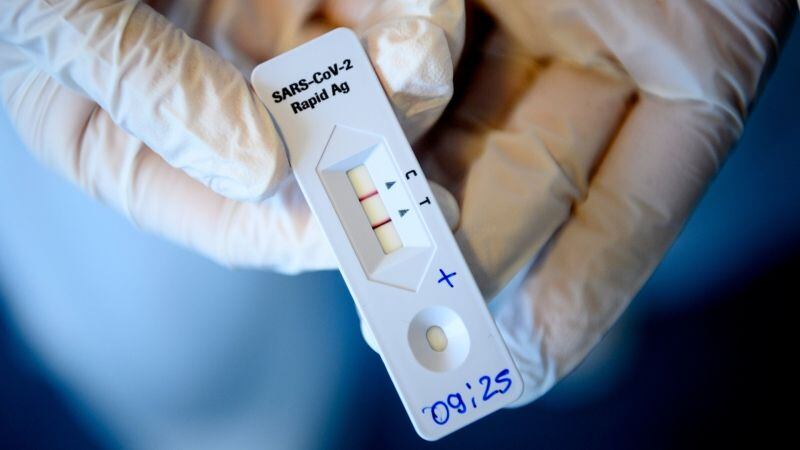
Dr. Philip Olla, CEO of Audacia Bioscience, says allowing the use of rapid tests is a step in the right direction as the rapid tests are much cheaper than the PCR, even if it isnt the ideal solution that everyone wanted
The changes around testing at the border could make travel less costly according to one doctor, but it's also a little bit more complicated.
Health Minister Jean-Yves Duclos announced that vaccinated travellers will no longer need a PCR COVID-19 test to enter Canada starting on February 28, they can instead opt for a rapid antigen test approved by the country they're coming from.
Dr. Philip Olla, CEO of Audacia Bioscience, says this is a step in the right direction as the rapid tests are much cheaper than the PCR, even if it isn't the ideal solution that everyone wanted.
"The first thing is that in addition to a PCR, you can also use a rapid antigen test, it's not either or. The other big thing there is if you use a molecular or PCR test, you have a three-day window where the test is valid, compared to an antigen where it's only valid for 24 hours."
He says that means a quicker turnaround for results, but people will have to plan around when they use their test in order to cross.
Dr. Olla says the other piece he thinks will really help is where people can get their tests from.
"You can get your test from a laboratory, a health organization like a hospital or pharmacy, or telehealth. The telehealth is really important because what that means is that you have the convenience of just literally getting hold of a test through one of these services and being able to use the test at your convenience."
There could be some confusion over the changes, but Dr. Olla says that really the only thing that's changed is being able to use a different kind of test.
He says the biggest confusion they've been hearing since the announcement is that you must use a rapid antigen test now, when the reality is people can use that or a PCR test.
"Your test have to be valid for 24 hours, people just don't quite get that component as well. And then what documentation is required. I mean that is something that is the same as before, you need to have a test from the country, it needs to state the address where the test was done, the type of test, the date and the time."
Dr. Olla says just showing a test result at the border won't work.
Anyone looking to travel will have to be supervised when taking the test either in-person or through Telehealth Ontario so they can receive a validated travel certificate, which is then uploaded to the ArriveCan app.
- with files from AM800's The Morning Drive