At an onsite news conference on Wednesday, the Nature Conservancy of Canada announced it has bought a rural farm and woodlot property near Harrow creating two new and permanent nature reserves Upper Cedar Creek and nearby Hillman Sand Hills
Supporting wetlands and forests in Essex County.
At an on-site news conference on Wednesday, the Nature Conservancy of Canada (NCC) announced it has bought a rural farm and woodlot property near Harrow creating two new and permanent nature reserves: Upper Cedar Creek and nearby Hillman Sand Hills.
Officials say these nature reserves provide habitat for wildlife and numerous species at risk, as well as important ecosystem services for communities in southwestern Ontario.
The trees that have grown from the acorns that Orfeo Lucchese and his family planted now shelter species listed under the federal Species at Risk Act, including some of Ontario’s rarest birds, like eastern wood-peewee.
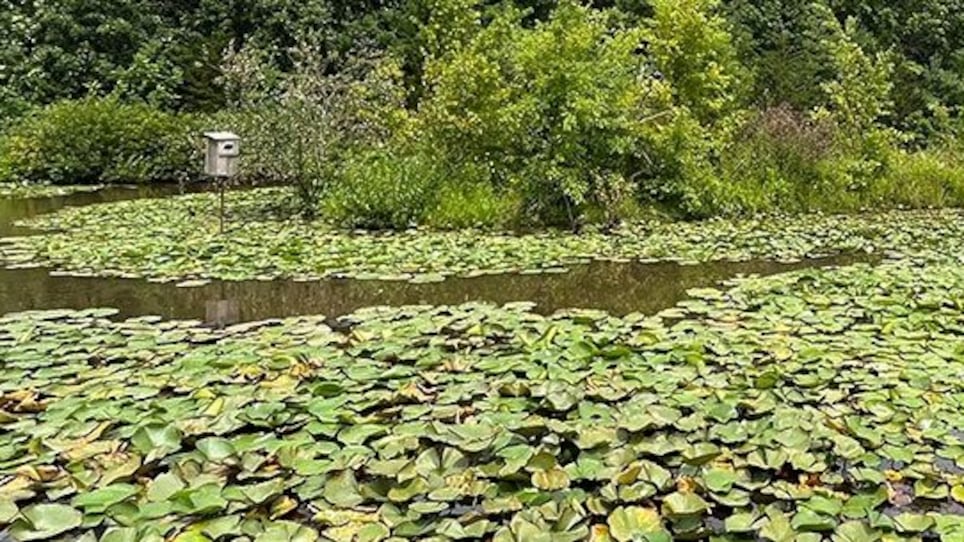
The restored wetlands are now home to painted turtles, while the shorelines are dotted with the vibrant pink flowers of swamp rosemallow.
Together, officials say these ecosystems store and filter water, absorb carbon and help lessen the impacts of climate change on surrounding communities in southwestern Ontario.
Upper Cedar Creek boasts more than 20 hectares of mature forest, thriving wetlands and meadows, and is surrounded by other conservation lands like Cedar Creek Provincial Park and NCC’s Marianne Girling Nature Reserve.
Located near the headwaters of Cedar Creek, its wetlands and forests provide clean drinking water and flood mitigation for communities downstream, while its forests help sequester carbon and clean the air.
Hillman Sand Hills is a 30-hectare ecological gem that contains pristine forest, ancient sand ridges and low-lying wet areas that offer habitat for salamanders and other at-risk species.
Located near Point Pelee National Park and the Hillman Marsh coastal wetland complex, Hillman Sand Hills has long been recognized as an environmentally significant site in Essex County.
Speaking on AM800's The Shift with Patty Handysides, associate director for conservation with the NCC Kristen Bernard says it was an exciting announcement for the region.
"Two really significant properties that contain some really important habitats, wetlands, Carolinian forests, meadows, and some open fields that we're looking to restore habitat in the coming years," she said.
Bernard says the public can access the sites, but the first step for the NCC now that they've acquired the properties is to undertake some biological inventory.
"To better understand the plants and animals that are on the properties and use that information to help us develop a property management plan where we'll look at things like public access. They're open to the public but there are no formal trails on them yet."
She says it really is a significant announcement because in southwestern Ontario we've lost a lot of our natural habitats, with up to 80 per cent of wetlands converted.
"These last remaining refuges of habitat are really critically important. And as I mentioned, even though there's not a lot of natural cover in southwestern Ontario and Essex County, it's significant in terms of the plants and animals that it supports. So anything that we can protect in the face of biodiversity loss and rapid climate change is critical," Bernard said.
These projects were made possible thanks to partnerships with the federal government, through Canada’s Nature Smart Climate Solutions Fund, the provincial government, through the Greenlands Conservation Partnership program, along with private donors who wished to remain anonymous.
- with files from AM800's The Shift