Prime Minister Justin Trudeau expected to announce Canada’s response to Trump’s tariffs at 8:30 p.m. Click HERE to listen live or HERE to watch live for continuing coverage.
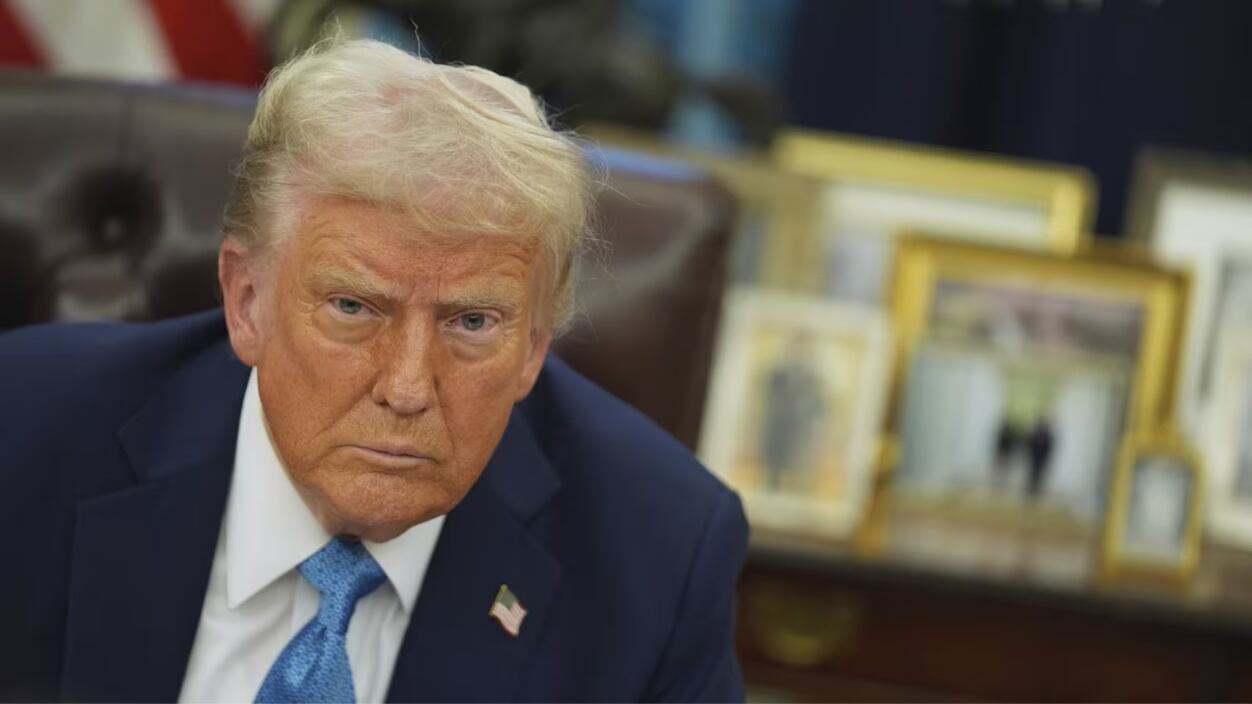
U.S. President Donald Trump made good on his threat to hit Canada with massive tariffs, signing an executive order imposing them Saturday.
Trump’s major trade action is expected to take effect on Tuesday.
On Saturday morning, the federal government was notified by the U.S. that Canada, Mexico and China were going to be hit with import tariffs.
The details:
-The tariff on Canada will be 25 per cent across the board, with the exception of energy, which will be hit with a 10 per cent tariff.
-Trump’s trade adviser Peter Navaro said in a call with reporters on Saturday that the energy tariff would include electricity, natural gas, and oil.
-According to CNN, Navarro also said that the president opted to go with a smaller tariff on these resources to “minimize any disruptive effects we might have.”
-Mexico is being hit with 25 per cent tariffs on all imports, including energy.
-China is being subjected to a 10 per cent tariff across the board.
Shortly after receiving confirmation tariffs are coming, Trudeau held an emergency meeting with his cabinet ministers at 3 p.m. EST, and then convened a call with premiers where he was expected to brief them on Canada’s initial retaliatory response.
Vowing yesterday that Canada would hit back Day 1 and not relent until Trump’s tariffs were removed, the prime minister will be announcing Canada’s initial retaliation around 8:30 p.m. EST in Ottawa, alongside Minister of Intergovernmental Affairs and Minister of Finance Dominic LeBlanc.
According to a senior government source, counter tariffs ranging from $10 billion to $85 billion were discussed as a response during the cabinet meeting, though the amount keeps fluctuating. One source in cabinet said they would not be surprised if Trump doubled his tariffs if and when Canada counters.
Federal and provincial governments have been co-ordinating for several weeks on a retaliation plan, and have been engaging with and leveraging stakeholders as part of a broader “Team Canada” approach.
Sources had previously indicated Canada was readying a three-round retaliation that would start with the singling out of a small list of American-made consumer products such as Kentucky bourbon and Florida orange juice that the prime minister would be imploring Canadians to buy Canadian alternatives to.
The government would then hit billions of dollars in U.S. goods with counter-tariffs, the sources said, noting energy export countermeasures remained on the table.
How Trump is justifying tariffs
According to a White House “fact sheet” Trump is imposing the tariffs to address a national “emergency situation,” and “public health crisis.”
Trump took this incredibly economic consequential swipe from his Mar-a-Lago club.
“The extraordinary threat posed by illegal aliens and drugs, including deadly fentanyl, constitutes a national emergency under the International Emergency Economic Powers Act (IEEPA),” reads the Trump administration’s rationale.
“President Trump is taking bold action to hold Mexico, Canada, and China accountable to their promises of halting illegal immigration and stopping poisonous fentanyl and other drugs from flowing into our country.”
As sources had indicated to CTV News earlier Saturday, Trump intends to keep the tariffs in place “until the crisis is alleviated.”
The White House claims Trump is leveraging America’s economic position “as a tool to secure our borders,” and that when voters elected him, they gave him a mandate to take this action.
Less than one per cent of fentanyl and illegal crossings into the United States come from Canada, with U.S. Customs and Border Protection seizing just 43 pounds of fentanyl at the northern border in the 2024 fiscal year.
Federal officials in Canada have repeatedly emphasized these and similar statistics, while initiating rounds of lobbying efforts with D.C. officials about Canada’s $1.3-billion border security enhancements in the face of Trump’s demand to crack down on the flow of migrants and drugs at the northern border.
That border plan includes deploying additional personnel, drones, surveillance equipment and helicopters to patrol the border.
Poilievre, Singh want Parliament recalled
Reacting to Trump’s trade action, Conservative Leader Pierre Poilievre said “we must put Canada first.”
Poilievre said his party condemns Trump’s “massive, unjust and unjustified tariffs on Canada’s already weak economy.”Reviving his call for the federal Liberals to recall Parliament, Poilievre pointed to his six-pronged plan to address the tariffs, including retaliating with dollar-for-dollar tariffs, while trying to minimize the impact on Canadians.
NDP Leader Jagmeet Singh said what Trump has done is “unleash an unprecedented trade war on our country.”
“It is urgent that the government is ready to put financial help into the hands of workers who are impacted, and that we protect as many jobs as possible with a strong commitment to buy Canadian,” Singh said.
“We also need to pressure Trump to back off, and that means putting retaliatory tariffs in place urgently, and cutting off the supply of critical minerals to the United States.”
Singh also echoed Poilievre’s call to bring the House of Commons back in session. Parliament is currently prorogued – a step Trudeau took when he announced his resignation to give his party time to run the now-ongoing race to replace him – and isn’t scheduled to resume until March 24.
While Canada can enact counter tariffs through policy measures that don’t require legislative approval, sources have told CTV News that the federal government is also planning a potentially pandemic-sized stimulus package to help businesses and workers.That relief, while the depth of it is dependent on what Trump dishes out, would likely require parliamentary sign-off as it would involve new spending measures.
Tariffs will raise prices on both sides of border
Confirmation that the U.S. is sparking a trade war with its closest ally comes after weeks of uncertainty and evolving messaging from the president and his officials about the size, scope, and timeline for tariffs.
Just yesterday, U.S. sources floated a March 1 start to Reuters, which Trump shot down within hours, affirming there was “nothing” Canada could do to avoid the imposition of Feb. 1 tariffs.
Trump initially threatened in late November to impose across-the-board 25 per cent tariffs on all imports from Canada and Mexico on “Day 1” of his second term.
That didn’t happen. Instead, he signed an executive order initiating a study on broader trade practices, to be completed by April 1.
To offer a snapshot of the scope of the bilateral relationship, Canada buys more U.S. goods than China, Japan, France and the United Kingdom combined. The U.S. sells more goods to Canada than any other country.
Canadian officials have repeatedly sought to emphasize that Trump’s tariffs will raise prices for consumers on both sides of the border.
A 25 per cent tariff could shrink Canada’s GDP by 2.6 per cent and cost Canadian households an average of $1,900 annually. South of the border, it would result in a 1.6 per cent GDP drop and an average $1,300 hit to American households.
On a daily basis, $3.6 billion in goods and services cross between Canada and the U.S., making for a $1.3 trillion annual trading relationship that employs millions on both sides of the border, according to the Canadian Chamber of Commerce.
Of note given Trump has decided to tariff energy, Canada is the number of supplier of energy to the U.S., supplying more than 99 per cent of U.S. natural gas imports, 85 per cent of U.S. electricity imports, and 60 per cent of U.S. crude oil imports, in 2023.
And, despite Trump’s repeated assertions of an unfair trade deficit with Canada, when oil exports are excluded, the U.S. has a trade surplus with Canada, according to federal data.