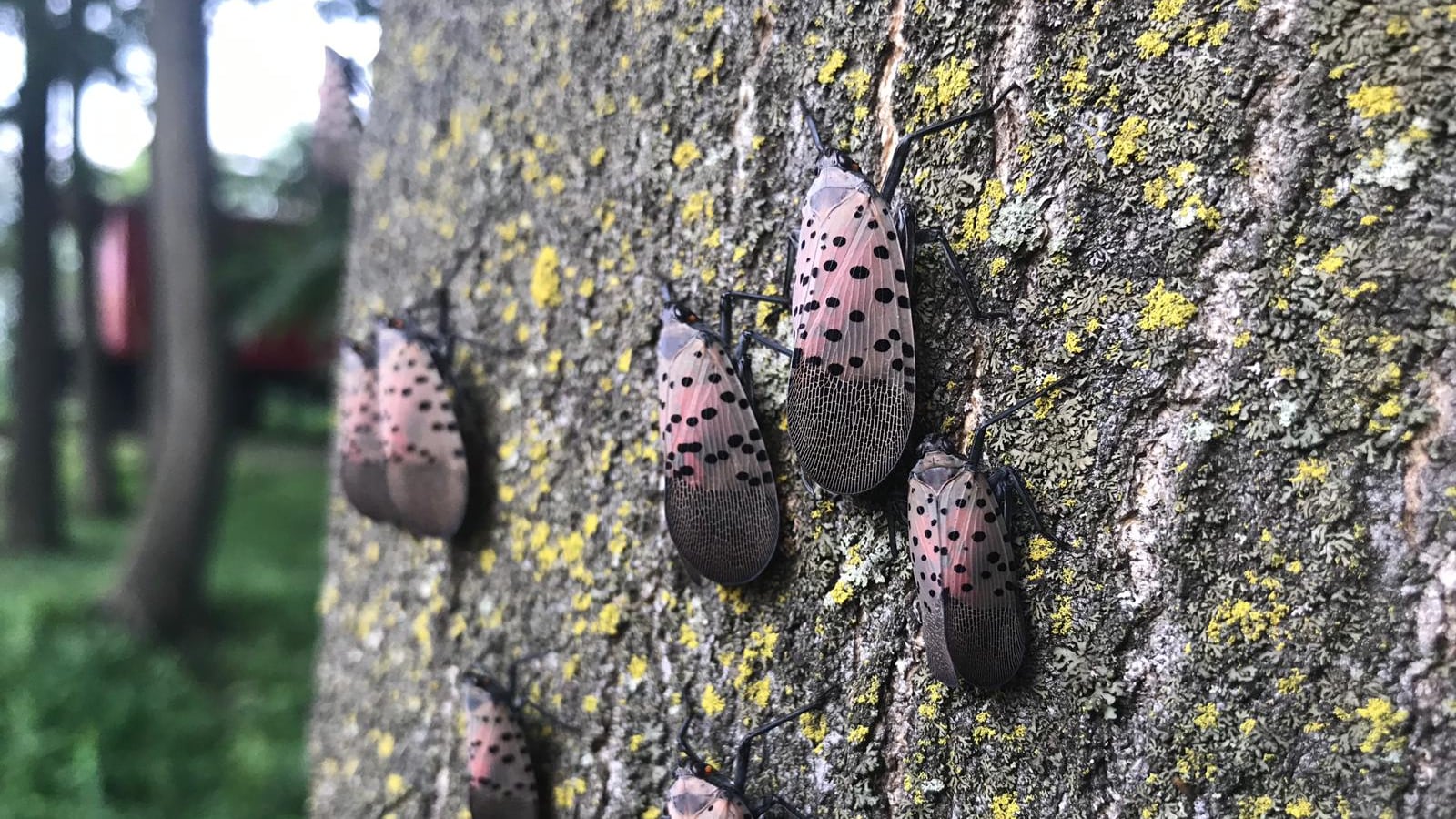
The spotted lanternfly, an invasive species, has been detected in Windsor, Ont., for the first time in Canada.
On Sept. 15, the Canadian Food Inspection Agency (CFIA) confirmed the detectiom. It is known to damage and kill grapevines, which can have a serious, negative impact on wineries in the area.
The CFIA added it can also impact other crop growers, the horticulture and forestry industries, parks, and yards.
According to the CFIA, there were interceptions and sightings of the spotted lanternfly last year in the Windsor-Essex area. That has now been upgraded to a detection.
The difference between a sighting, interception, and a detection, as per the CFIA:
- Sighting: Reports of spotted lanternfly in Canada that the CFIA is aware of, including those made on public reporting websites. CFIA has followed up on these, and could not confirm the report, as no spotted lanternfly speciment was found.
- Interception: Live or dead spotted lanternfly, confirmed by the CFIA through specimen collection, but not observed during official CFIA surveys.
- Detection: Presence of live spotted lanternfly, confirmed in the Canadian environment through official CFIA surveys.
In order to reduce the spread, movement restrictions have been put in place, preventing the movement of regular materials, including potentially infested plants.
Surveillance is in place in the affected area to figure out how bad the infestation is.
“You can help identify and report new invasive species, such as spotted lanternfly,” said Colin Cassin, executive director of the Invasive Species Centre.
“The earlier an invasive species is detected, the better the chances of reducing spread to other areas.
The community is asked to learn how to identify the lanternfly in all stages of its life:
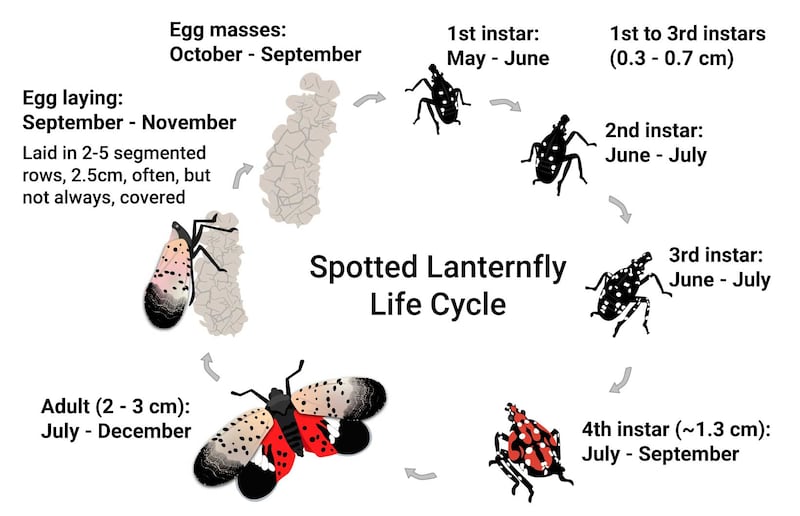
- Spotted lanternfly egg masses appear as grey smears of mud on host trees and any hard surface outdoors, typically visible beginning in September and throughout the winter until they hatch sometime in the spring.
- Spotted lanternfly early-stage nymphs are black with white spots; late-stage nymphs are red with black and white spots. Visible in spring and summer, they tend to congregate in swarms and climb plants and trees to feed.
- Spotted lanternfly adults have pinkish-grey wings with black spots. They also congregate in large swarms on trees, grapevines, and other plants, and may be seen from summer until they die in late fall/early winter. Adults are most active in September and October, when they are mating and laying eggs.
- Honeydew (clear, sticky liquid insect excrement) can accumulate at the base of a host tree. It can foster growth of sooty mold and often attract bees and wasps.
If you see suspected spotted lanternfly eggs, nymphs, or adults, you are urged to take a photo or video. Then, catch the insect or scrape the eggs into a sealable plastic bag or container.
After that has been done, report it to the CFIA immediately. They ask that it has an accurate location and photos of the insect. It will respond to reports and take the necessary action.
In order to reduce spread, check your vehicle and any items that have been outside for a period of time if you are in an area that is known to have infestations. You can also take your vehicle through a high-pressure car wash.
You are reminded to also not move firewood and buy and burn your wood locally.
More on the spotted lanternfly is available on the Invasive Species Centre’s website.