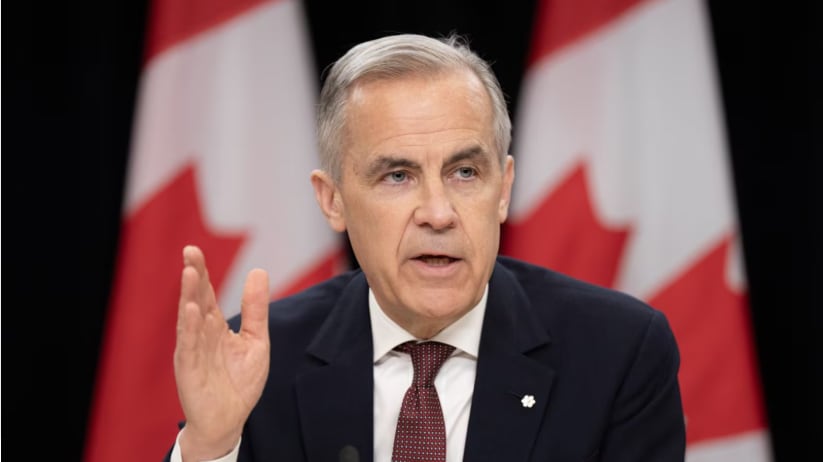
Prime Minister Mark Carney’s Liberals have secured a majority government, clinching two of three byelections being held Monday night.
Nearly a year after last April’s minority government win and on the heels of courting five opposition MPs to cross the floor, Carney’s grip on power just got tighter.
In the Liberals’ first win of the night in University-Rosedale, Ont., candidate Danielle Martin won the party’s 172nd seat in the House of Commons.
Her victory put the prime minister in a steadier, more predictable position in Parliament, though it was not the last Liberal win of the night.
Moments later, CTV News also projected that Doly Begum – who stepped down as deputy leader of Ontario’s NDP to run for the Liberals - won her Scarborough Southwest seat.
Should Carney also pick up the hotly contested and likely nail-biter Terrebonne, Que. riding, it would mean the Liberals will be sitting at 174 seats.
Polls closed at 8:30 p.m. ET and full results are still being counted and tabulated.
Carney not expected to speak tonight
The last time a federal political party formed a majority was Justin Trudeau’s Liberals in 2015, before being reduced to a minority in 2019, a parliamentary posture the party held in every election since.
Despite this feat, Carney is not expected to speak to the results tonight. Instead, his office has signalled his intention will be to return to business-as-usual tomorrow, scheduling an announcement of “new measures to bring down costs for Canadians.”
He’s also got plans to participate in a practice with the Ottawa Charge, the capital’s PWHL team, alongside Finnish President Alexander Stubb who is in town and will be visiting Parliament.
Political insiders that are part of CTV News’ special coverage characterized the Liberal party’s turnaround from the end of the Trudeau era as stunning and widely attributed it to Carney’s specific brand of leadership and his handling of the geopolitical landscape.
From diversifying Canada’s trading partners in the face of U.S. President Donald Trump’s evolving threats, to promising to build major projects at home, the prime minister’s plans – which he now likely will have a longer runway to execute – have attracted politicians from across the political spectrum in a manner not seen in decades.
Though, the way the prime minister has cobbled this majority together – while entirely legitimate under Canada’s political system – has not sat well with the opposition parties and the voters who supported them in the 2025 federal election. The pressure will now also ratchet up considerably for Carney to leverage his stronger standing to start delivering on his host of big promises.
Terrebonne riding results incoming
Martin, the newest MP for University-Rosedale, Ont. was previously the chair of the University of Toronto’s family medicine program. She beat out Conservative candidate Don Hodgson and New Democrat Serena Purdy.
The riding has been held by a Liberal since 2015, when it was created from portions of Trinity-Spadina and Toronto Centre, which also had strong histories of sending Liberals to Ottawa.
Begum defeated Conservative candidate Diana Filipova and NDP hopeful Fatima Shaban, in a riding that has been held by Liberals for decades, with the exception of between 2011 and 2015 when New Democrat Dan Harris held the seat.
In Terrebonne, Que., Liberal candidate Tatiana Auguste is facing off against Bloc Quebecois candidate Nathalie Sinclair-Desgagné – who held the seat from 2021 until last year’s election – and Conservative hopeful Adrienne Charles.
In the April vote, the seat was declared for the Liberals, before flipping to the Bloc Quebecois during the validation process, and then back to the Liberals after a judicial recount.
The result was then further challenged due to the fact the Liberal win came down to a single vote, and a Bloc Québécois supporter said her mail-in special ballot was never counted.
Last month, the Supreme Court of Canada invalidated the election result, freeing up the seat and requiring a byelection to fill it. Over the last few weeks, the Liberals put a concerted effort on ensuring a series of senior cabinet ministers knocked on doors in this constituency.
While the Terrebonne vote count was already facing higher scrutiny because of last results, it also drew the attention of the Longest Ballot Committee, a protest group pushing for electoral reform.
With 48 people on the ballot in Monday’s byelection, Elections Canada allowed write-in ballots to make the process simpler for voters, but as a result has lengthened the vote-counting process. Elections Canada has said it could take well into the night, or early Tuesday morning for complete results in that riding to be released.
Carney, as well as Conservative Leader Pierre Poilievre and NDP Leader Avi Lewis, encouraged Canadians to head to the polls and have their voices heard when polls opened Monday morning.
While work resumed on Parliament Hill on Monday, the byelections have been the predominant focus, with Liberals indicating they were optimistic about the outcome and dismissed opposition criticism that Carney’s path to a majority wasn’t entirely directed by voters.
Conservatives, meanwhile – still fielding inquiries about efforts to lure them to cross the floor – said no matter the outcome, they would be determined to keep fighting for their constituents and push for what will make a difference in Canadians’ lives.
Floor-crossers helped Liberals get here
The Liberals had hovered around the 172-seat threshold for a majority government since the 2025 general election, when they came up just three ridings short, winning 169 seats.
After months of working across party lines to garner enough support to pass bills, and those two aforementioned Trudeau-era cabinet ministers resigning, a series of floor-crossings started to make the math easier for Carney’s minority government.
In about as many months, Carney attracted five opposition MPs to cross the floor, putting his party at 171 seats as of last Wednesday when Marilyn Gladu became the newest Liberal recruit.
The standings in the House of Commons going into Monday’s byelections were: Liberals 171 seats, Conservatives 140 seats, Bloc Quebecois 22 seats, NDP six seats, Greens one seat, and of course the three vacancies. Combined, the opposition parties held 169 seats.
Just one riding victory granted the Liberals a majority on paper, but would have required Liberal MP and House Speaker Francis Scarpaleggia to cast a vote in their favour in the case of a tie. The second victory this evening slightly strengthens their ability to control parliamentary outcomes.
While the prime minister no longer has to worry about losing a confidence vote triggering an early election, his functioning majority is still very slim. That’s because House Speaker Francis Scarpaleggia is counted in the Liberal ranks but does not vote in the House of Commons except in the event of a tie, and so to go from a technical to functioning majority additional seats are needed.
There is also still rampant speculation that additional opposition floor-crossers are waiting in the wings to join the Liberals, and any additional MP gained that way will further bolster Carney’s position.
Carney has already insisted that he is not considering proroguing Parliament if he secures a majority. He wouldn’t need to, in order to take control of House committees, which are widely considered where the bulk of work in the Commons can be accomplished.
“We are absolutely focused on working with Parliament, getting legislation through Parliament, adjusting legislation where it needs to be, where it’s better informed by the discussions in Parliament,” Carney said in late March.