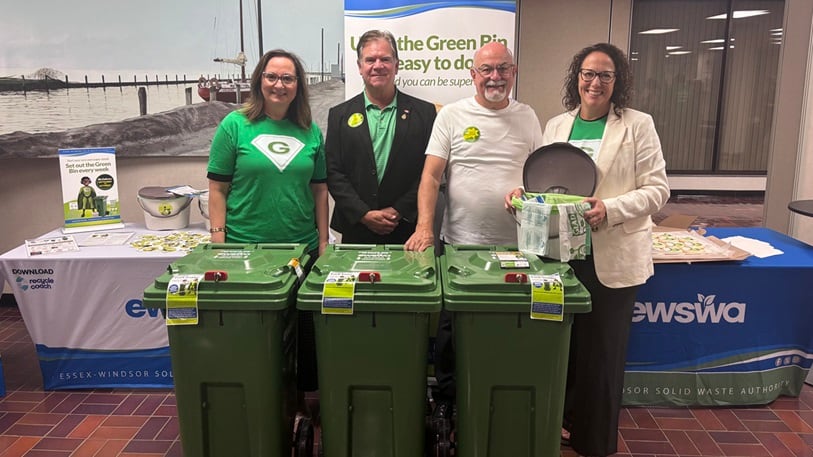
Phase 2 of the green bin program is officially underway.
The Essex-Windsor Solid Waste Authority (EWSWA) officially kicked off the second phase and is preparing to deliver about 27,000 green bins to homes in Amherstburg, Kingsville and Leamington.
Deliveries will begin in mid-September and continue through late October, with weekly collection set to begin the week of November 2.
Residents are being reminded to read the welcome sticker placed on the lid of their new green bin before putting it away as each bin will contain a kitchen catcher and compostable bags to help residents get started.
Phase 1 municipalities, including Windsor, Essex, Lakeshore, LaSalle and Tecumseh, have had green bin collection since last October.
In its first year, the program kept more than 9,000 tonnes of food waste out of local landfills - the equivalent of 50 adult blue whales.
Cathy Copot-Nepszy, Manager of Waste Diversion with the EWSWA, says residents should begin using their green bins before collection officially starts.
“We also know at collection, very important is a lot of people didn’t realize that they need to start a week before. So they want to start using their green bin and setting up a week before, the last week in October, before the November start so that their green bin is full when our collection trucks come around.”
She says while many residents in these Phase 2 municipalities already compost, the green bin can take it to the next step.
“With any green bin program with rural communities, we always just tell them, if you’re already composting, we don’t want you to stop that, but there might be things that you can’t compost in your backyard that you can put in a green bin. And that could be bones, oils, grease, that sort of thing. So we don’t want to change if someone is sustainable, but we can enhance it with the green bin.”
She says while many residents know that typical food waste can go in the green bin, there’s a lot more to it.
“Definitely paper compostables where there’s food scraps on there. So if you have a takeout container and there’s still some food on there or sauce, you want to put that in there, that’s welcome to it. Or an egg carton that maybe has a broken egg on it. We also welcome like pet/human hair.”
Copot-Nepszy adds that EWSWA is really pleased with how clean the organic waste is from the Phase 1 municipalities, where not even 0.1 per cent is contaminated.
All of the organic waste collected through the program is sent to Seacliff Energy in Leamington, where it’s used to produce liquid fertilizer.