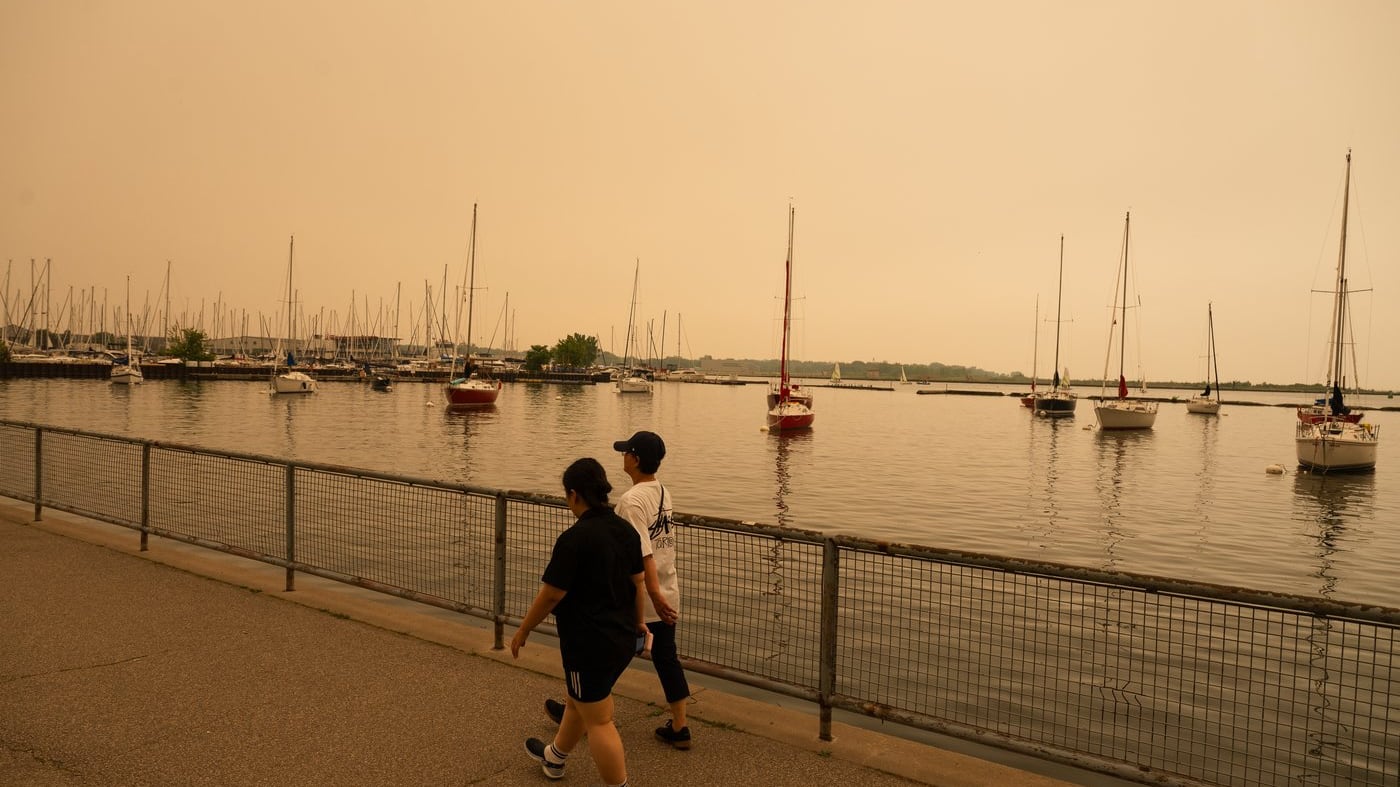
Smoke from Ontario’s wildfires left more than 19 million people exposed to ‘hazardous’ air in Canada and the U.S. on one single day in July, underscoring the extent of its impacts.
A new report from the United Nations University Institute for Water, Environment and Health took a closer look at the “transboundary smoke problem” posed by the wildfires.
The report found that from July 15-17 exposure to “unhealthy, very unhealthy, or hazardous air quality” reached nearly 106 million person-days in Canada and the U.S., with that statistic accounting for people who were exposed to the poor air quality on multiple days.
The report found that on one single day on July 16 there were approximately 19.2 million people in Canada and the U.S. exposed to “hazardous” air and another 31.6 million exposed to “unhealthy” air.
On July 17, approximately 6.1 million people in Canada and the U.S. were exposed to “hazardous” air and another 37.8 million were exposed to “unhealthy” air.
“Smoke does not check passports,” director of UNU-INWEH Kaveh Madani said in a news release. “What burns in a forest in northern Ontario is breathed in a schoolyard in Chicago a day later. It is a shared problem and it has shared solutions. The communities that are evacuated first and hit hardest need investment. And cities need to plan for smoke the way they have learned to plan for heat.”
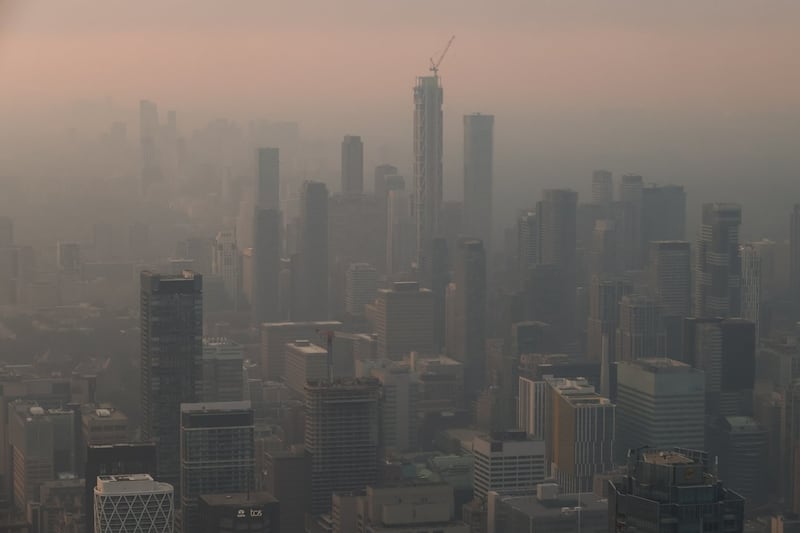
The report notes that Ontario recorded 565 fires by mid-July with those fires burning more than 728,000 hectares, which is roughly three-and-a-half times the 10-year average in the province.
Smoke from the fires eventually drifted south, with poor air quality reported in Detroit, Minneapolis, Milwaukee, Chicago, New York City and Washington, D.C., the report notes.
That, in turn, prompted criticism from U.S. President Donald Trump, who complained that his country was being “invaded by filthy, polluted, and unhealthy air” because Canada was “not properly maintaining” its forests.
In its report, the UNU-INWEH argued that “rising temperatures and prolonged dry spells driven by climate change” have made many ecosystems “more susceptible to large-scale fires” and will continue to.
“Wildfires’ secondary effects, particularly smoke, can affect vast populations far beyond the fire zones,” the report states. “Wildfire smoke contains harmful pollutants such as fine particulate matter (PM2.5) and volatile organic compounds, which can travel hundreds or even thousands of kilometers, impacting air quality and human health across national and international borders.”
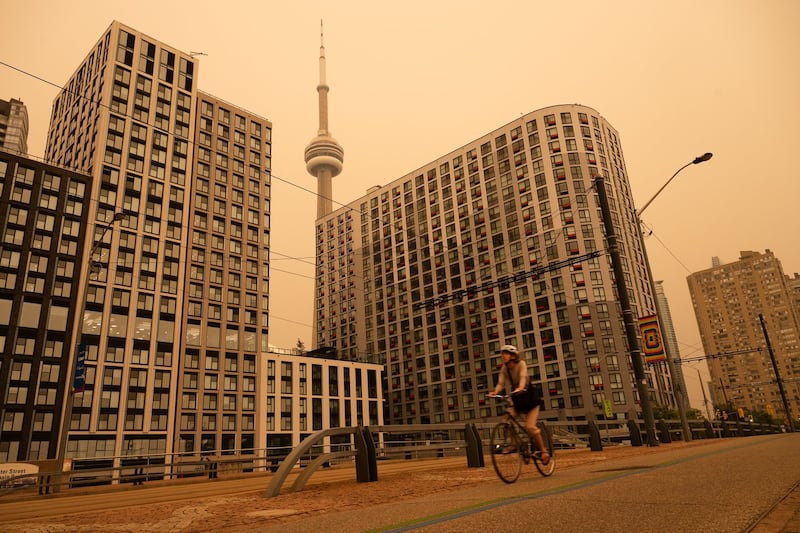
At one point in July, Toronto had the worst air quality among major cities globally due to the wildfire smoke.
Public health officials warned residents to stay inside amid the wildfire smoke and at least one Toronto hospital network reported a significant jump in emergency room visits for “respiratory and air-quality” issues amid the poor air quality.