OTTAWA – Canada’s population dropped by 0.1 per cent in the first three months of the year as the federal government’s lower immigration targets took hold.
Data released by Statistics Canada on Wednesday showed that Canada’s population dropped for the third consecutive quarter. As of April 1, there were approximately 41.4 million people living in Canada, a decrease of 55,025 people.
Statistics Canada attributes the decline to lower fertility rates, as well as lower immigration targets established by Immigration, Refugees and Citizenship Canada for the 2026 calendar year. Part of that plan is to reduce what it calls “Canada’s temporary population” to less than five per cent of the total population by the end of 2027.
McMaster University professor Bruce Newbold studies population issues and their relation to immigration, health and aging. He says Canada’s population has been declining for decades.

“The baby boom was a blip in terms of that increased fertility level,” he said. “Since then, we’ve been on that downward trajectory, and over the past decade or two, we’ve had fertility that is what’s below what’s called ‘replacement level fertility.’”
Newbold says the fertility decline has been a long-term trend in Canada that has been propped up by immigration.
“The government has since cut back immigration levels over the past two years, and that’s where we’re seeing this decrease in the rate of growth.”
In the short term, Newbold says he isn’t concerned by the slight population decrease. If that trend continues, however, economic growth could be impacted.
“One of the concerns is that when we have a slowing or a declining population growth … our economy is also going to slow,” he said.
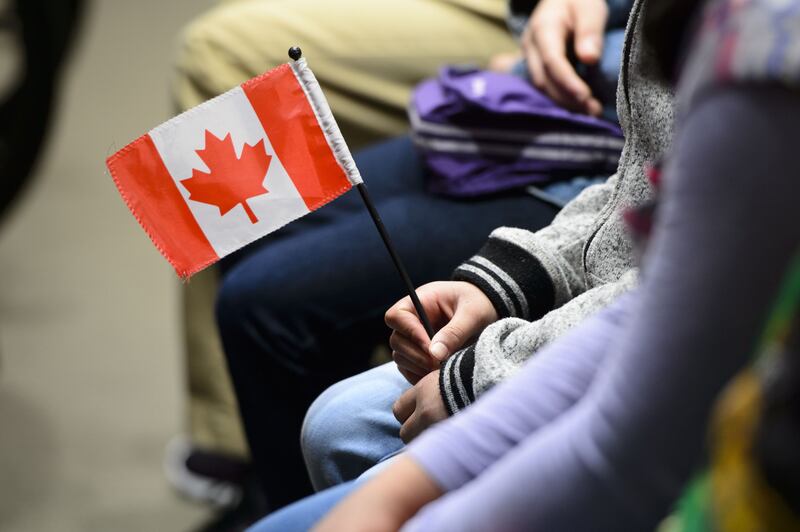
From January 1 to April 1, Canada welcomed 83,149 permanent immigrants, a decline of 20.2 per cent compared with the number of permanent immigrants welcomed in the same quarter of 2025 (104,210). The agency says the preliminary number of non-permanent residents decreased by 117,879 people in the first quarter of 2026. Those numbers, however, will be updated with final data in September.
Immigration lawyer Chantal Desloges says she is seeing a decrease in the number of temporary residents, as well as permanent residents being approved.
“That is a very deliberate step that’s been taken by the government in response, largely, to public opinion and rising cost of living,” she said. “We’re seeing less overall numbers across all lines of business; that includes family-class cases like people wanting to bring their parents to Canada; it includes people who are coming here on a skills basis or on a business basis.
“Across all lines of business, those numbers are being cut.”

Because of Ottawa’s immigration overhaul, Desloges is seeing what she calls a “sea change” happening. More people, she says, are choosing countries other than Canada to start their new lives.
“We’re seeing an increased number of people that have options in places like Australia or the U.S. or the U.K., and they’re choosing those options instead,” she said. “So, Canada is becoming a less attractive destination overall.”
In addition, Desloges says she is seeing more permanent residents leaving Canada.
Meetkumar Pathak came to Canada 13 years ago as an international student. He says he quickly got his study permit quickly, then got his citizenship within nine years.
“Canada checked all my boxes, had great potential and opportunity here,” he said. “There was a lot of potential for a person like me from India.”

Now a successful business owner in Ottawa, Pathak says he is extremely happy with the life he has built in Canada. But that happy ending isn’t happening for many of his friends and family.
“It’s definitely a lot of challenges now,” he said. “Canada has been shutting down its borders for us and there is a lot of new challenges for the students, they are not getting their work permits on time and they are expiring.”
Pathak says he has several friends and family members who have had to go back to India.
“A lot of people are moving back to India where I am from,” he said. “A lot of my relatives are going back to India because they cannot have the right opportunity here and the right time … It’s very, very tough right now in Canada for immigrants.”