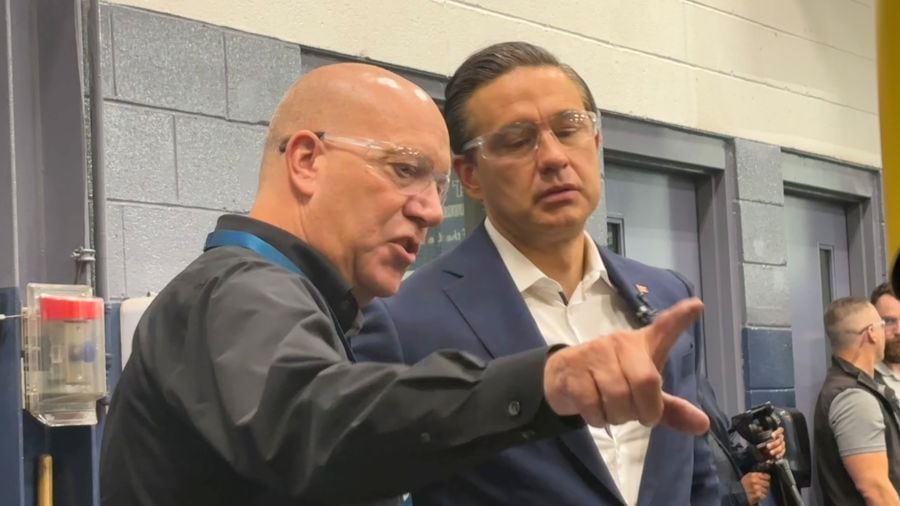
A top official at a Windsor manufacturing plant says the difficult part right now is that ‘they don’t know what tomorrow looks like’ because of U.S. tariffs.
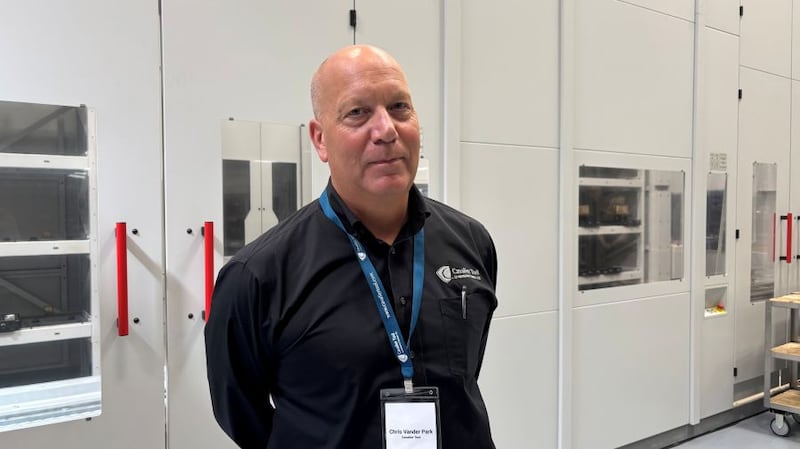
International Business Manager at Cavalier Tool and Manufacturing in Windsor, Chris Vander Park, says they are not being impacted by the Section 383 tariff issued by the U.S. that went into effect Friday, but they are still being impacted by the previous Section 232 tariffs imposed by the U.S., which have been applying a 10 per cent to 15 per cent tariff on some of their products, including injection molds.
Vander Park, says if they knew what was going to happen, they could plan but right now it’s impossible.
“We’ve changed seven times since February 2025 as to what a tariff was, what it looks like, and what it’s going to be,” he says. “The Section 232 was April 6, but before that it was August 18. It changes constantly. The uncertainty is what we’re having a very hard time with. With our employees, future work, and with our customers as to what we’re going to do and how we’re going to do it.:
Vander Park says the U.S. market is very important to their business and that they are intertwined with the U.S.
On Monday, U.S. President Donald Trump posted on social media that additional tariffs on imports of cars, trucks and auto parts from Canada will increase to 50 per cent starting January 1st, 2027, after trade talks between the two countries broke down.
Vander Park, says the biggest question they’re facing from their customers is what’s the final price.
“If we quote a job and it’s $100,000 when we quote it, our price hasn’t changed. What’s changed is the tariffs. $100,000 when I quoted it, it was a 15 per cent tariff, so now it’s $15,000. We build million-dollar tools, that’s $150,000 on top of $1 million. People don’t have that in their CapEx; they’re not planning for that,” he says.
Conservative Party of Canada Leader Pierre Poilievre toured the plant Monday during a stop in Windsor.
Vander Park says the tariffs issued this past April under section 232 are difficult for their business.
“We’re a flat tax now; it’s not a tariff; it’s a flat tax on the purchase of goods,” he says. “I was explaining to Pierre that we machine a block of steel, and they cut out 35-40 per cent of the steel. I get tariffed on that; that goes to scrap. I have to pay a tariff on that now. Very, very difficult for us to do business. The difficult part is I don’t know what tomorrow looks like.”
Cavalier Tool and Manufacturing produces a wide range of products and molds for the automotive industry, washing machines, and dishwashing machines, to molds for plastic bins.