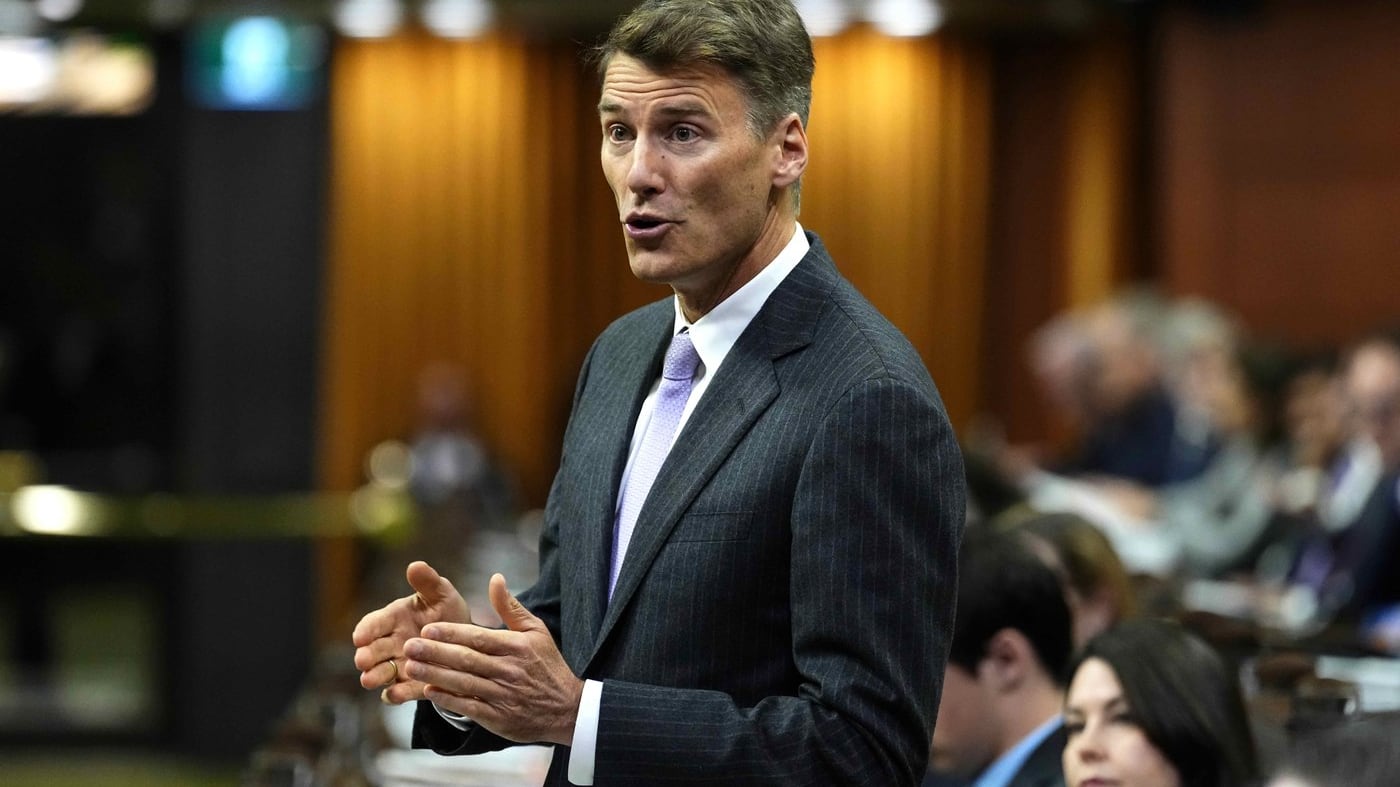
OTTAWA — Housing Minister Gregor Robertson wouldn’t reaffirm the Liberal government’s long-standing goal of doubling the pace of home building when pressed by reporters on Wednesday.
The Liberals campaigned during the 2025 election on a pledge to double the annual pace of housing starts to roughly 500,000 over a decade.
But that promise was absent from the federal budget tabled on Nov. 5. The Liberal government instead set new goals in Budget 2026 to triple the pace of non-market housing construction over the next decade and to end homelessness.
Parliamentary Budget Officer Annette Ryan noted the missing reference to doubling home construction in a series of reports analyzing the budget published Tuesday.
“While Budget 2026 announces new measures for homelessness and housing affordability, it is not on track to double housing starts per Budget 2025, with year-to-date housing starts 4 per cent lower in 2026 than 2025,” one of Ryan’s report read.
The Canadian Press asked Robertson’s office last week whether the Liberals were sticking to the target. A spokesperson for his office pointed to a statement sent to The Canadian Press six months earlier reaffirming the pledge.
Reporters asked Robertson as he was heading into the Liberal caucus meeting on Wednesday if the government is sticking to the pledge it campaigned on a year and a half ago.
“We’re just focused on supply overall for the time being. Affordable supply first and foremost,” he said in response.
Robertson said the goal of doubling housing starts was based on the Canada Mortgage and Housing Corp.’s estimates of the supply gap, or the number of homes the country needed to add to restore affordability to 2019 levels.
Hitting that annual pace requires the private sector to build at scale, he said, adding the government is “doing everything” it can to stabilize markets like Toronto and Vancouver that are struggling to get shovels in the ground.
The minister said the government has made “unprecedented” interventions to stimulate construction, including moves to axe the GST on many newly built units and other federal incentives to get municipalities to lower costly development charges.
But “the Government of Canada cannot force Canadians to build housing,” he said.
“Right now we’re doing everything that we can in a very challenging time for our economy,” Robertson said.
“We have to continue focusing on where we intervene, working with provinces and cities to get them building as much as possible and looking at the affordable side. That’s where the role of government is, to make sure there’s affordable housing getting built.”
Non-market housing is usually more affordable and relies on government support to get built -- but those homes account for only a small share of the overall number of units built in a year.
Conservative housing critic Scott Aitchison accused the Liberals of quietly dropping their homebuilding target and moving the goalposts.
“Their big promises have become another Liberal housing illusion. Tripling the speed of slow is still unbearably slow and will not make homes affordable again,” he said in a media statement on Tuesday.
In its fall housing supply report, the CMHC wrote that the country is entering a “new phase” where slowing population growth is leading to more balance in Canadian rental markets.
But the Crown corporation warned that the annual pace of housing starts is well short of levels needed to restore pre-pandemic affordability to the market in the next 10 years.
The CMHC’s “business-as-usual” forecast sees Canada breaking ground on 231,000 homes per year, which it estimates would leave the market up to 238,000 homes short of affordable levels by 2036.
Affordability will remain out of reach if Canada fails to take advantage of this moment to rapidly build housing supply ahead of the next surge in demand, the CMHC said.
Experts point out that many of the levers to increase housing supply are outside the government’s direct control, such as Bank of Canada interest rates and the cost of building materials.
Mike Moffatt, founding director of the Missing Middle Institute, told The Canadian Press last week that he never liked the goal of doubling housing starts because it could be “excessive” and lacks a nuanced approach to the mix of homes Canada must build.
Craig Lord, The Canadian Press