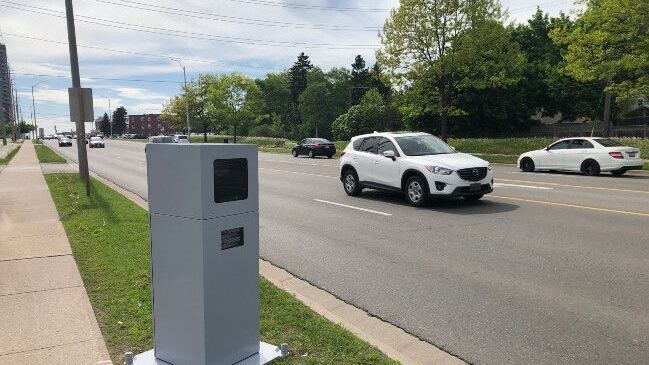
The Ford government has passed a controversial omnibus bill banning municipalities from installing speed cameras.
Bill 56, the “Building a More Competitive Economy Act,” was introduced on Oct. 20, with the government saying it would reduce red tape.
The large bill included a provision to ban speed cameras, which Premier Doug Ford has called “a cash grab,” despite vigorous opposition from groups who say the devices improve safety.
The bill was fast-tracked through the legislature, with the government limiting public consultations and debate. It was introduced for third reading Wednesday and was voted on in the legislature Thursday afternoon. It passed 69-41, with the support of all PC MPPs in attendance.
The government has said it will instead focus on “alternative traffic-calming measures,” such as speed bumps, speed cushions and roundabouts, as well as enhanced signage and education campaigns.
Responding to criticism around fast-tracking bills Thursday, Ford said he believes his mandate from voters means that debate is unnecessary.
“We had public debate, and it was called the election, six months ago, and we had a clear mandate,” Ford said. “I wasn’t hiding what we were doing. We put our mandate out there. The people elected us, and we’re moving forward.”
However a look back at the government’s plan during the February election shows they never said they would ban speed cameras. Rather, the PCs said at the time that they would “focus municipal speed and red light cameras on achieving legitimate safety outcomes in school and safety zones versus growing municipal revenues and ensure greater transparency on their placement.”
When it comes to speed cameras, Ford said this week that less than 10 per cent of Ontario municipalities want them.
“They want to gouge the public. We have a solution,” he said. “And the solution is you want to calm traffic, you put in calming infrastructure, and you put either speed bumps, turnabouts, raised pedestrian walkways – that slows it down.
“Speed cameras don’t slow anyone down unless you’re in the community and you get dinged a few times. But it doesn’t make the place safer. Our solution makes community safer, theirs doesn’t.”
While the bill has passed, it still needs royal ascent to become law. The government says that is expected to happen on Monday.
— reporting by CP24's Joshua Freeman