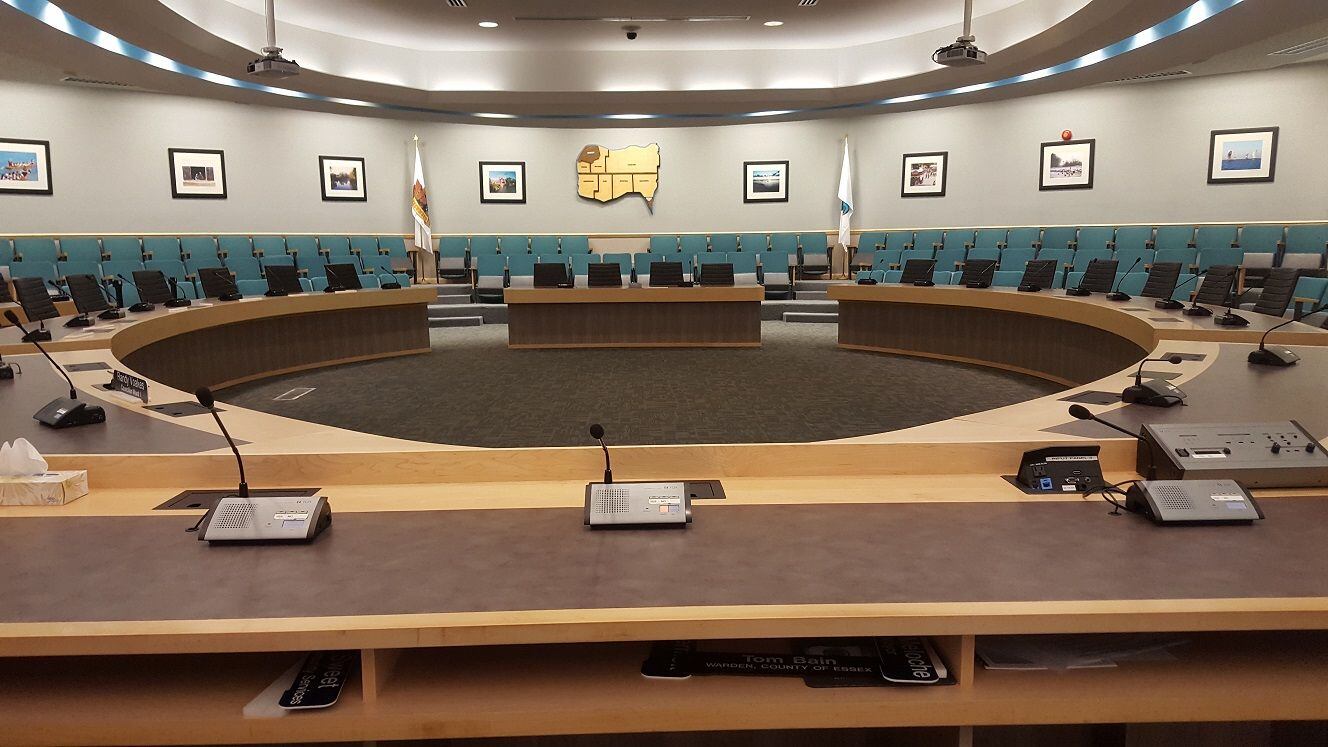
After a lengthy discussion, Essex County Council will make a final decision next month on whether or not to move forward with development charges.
Council met Wednesday evening, where the first draft of the development charges bylaw was presented. The county developed the bylaw to establish a framework for funding growth-related infrastructure.
Development charges allow municipalities to levy fees on new projects to recover capital costs required to service growth such as roads, water and sewers - thereby reducing the financial impact on existing taxpayers.
While many of the councillors felt that development charges are long overdue, some expressed concerns that they may deter future developments.
If approved by council in November administration would like it go into effect January 1, 2027, with a phased in approach of rates increasing by 25 per cent annually over four years. A couple of councillors asked for administration to include a few options for rates and the start date.
The development charges being proposed include $12,500 for a single or semi-detached unit, with a lower charge for smaller unit types. And for non-residential builds the maximum charge that can be imposed is $46.34 per square-metre.
Lakeshore mayor, Tracey Bailey, says just because the county can implement this charge, doesn't mean they should.
"These are uncertain times, we're seeing people using food pantries, and food banks, and supports like that three times the usage we've ever seen before, record high unemployment, residents that are being costed right out of the system, people that can't afford the taxes as they exist today, and this is layering on another level of costs that quite frankly our residents in this region can't bare."
Lakeshore deputy mayor, Kirk Walstedt, says this bylaw should be scrapped and relooked at.
"Perhaps at a future date when the economy and inflation is again on the rise. Unemployment is the highest in the country, I believe, in this area, and this certainly isn't going to help anything. It's not going to get people into homes."
LaSalle mayor, Crystal Meloche, says this is the wrong time to move forward with this charge.
"I think that we've had these conversations about who's going to pay for growth, and growth should pay for growth, and so when I look at this I think... now is a very, very hard time for us to put this in."
Meanwhile, Tecumseh deputy mayor, Joe Bachetti, says this is a balanced approach to sustain the future of the county.
"One of our strategic goals is building a regional powerhouse... how do you do that? When you talk about needs and wants, I want an ambulance to be able to come to my home, is that a need or want? It's a need, and that's one of the things that are there. Roads...I don't want to be stuck in traffic - gridlock - an hour on our county roads to get from point A to point B."
Amherstburg deputy mayor, Chris Gibb, says it'll never be the right time to implement these charges... but it needs to be done.
"Is it the wrong time to do this? Yup. It's always going to be the wrong time to do this. It's going to be the wrong time to do this next year, five years, 10 years down the road. We have to have an equitable system of paying to grow this county, and maintain this county."
While many of the seven local municipalities have their own development charges, the county as a whole does not.
The bylaw applies county-wide and covers most services such as roads and libraries. Capital costs for the Sun Parlor Home facility are excluded until the feasibility study ends in 2026.
Builds exempt from the bylaw would include hospice, post-secondary institutions, affordable or attainable housing, and industrial expansions of 50 percent or less.
Final deliberation on the bylaw will take place during the November 19 meeting.