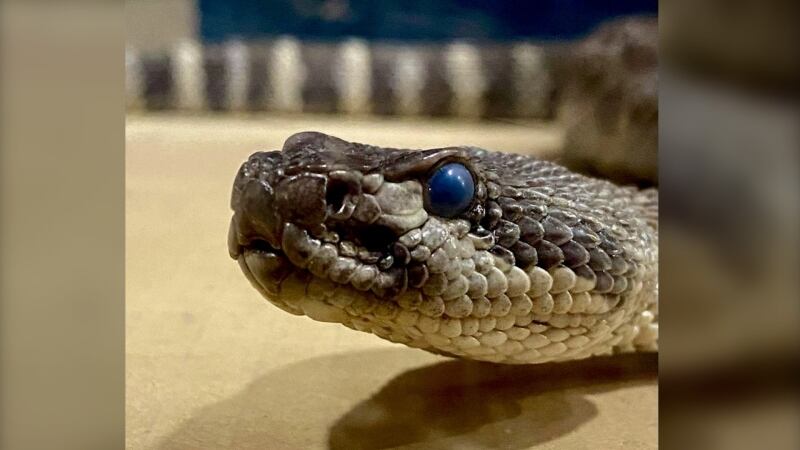
The species locally has seen a 99 decline since the 1970s, with only one found during observation efforts in the Ojibway Prairie Complex and Greater Park ecosystem in 2019
Work continues to restore the population of Massasauga rattlesnakes in Windsor-Essex.
The species locally has seen a 99% decline since the 1970's, with only one found during observation efforts in the Ojibway Prairie Complex and Greater Park eco-system in 2019.
There's currently 413 hectares of critical habitat locally that can support the snakes in west Windsor and LaSalle and efforts have been made to test release sites to reintroduce the population locally using offspring from four adult Massasaugas that were rescued from a development site in Windsor that were brought to the Toronto Zoo.
In the fall of 2021, 12 of the Massasaugas from Toronto were put into fully enclosed artificial hibernation tubes to test the sites. It was deemed a success as they all survived, and were then returned to the zoo.
There are three things that need to be done locally to help: protect the habitat, physically link the natural habitat with corridors and eco-passages, then re-stock the habitat with captured Massasauga's to prevent total population collapse.
Lead biologist Jonathan Choquette says most sightings are not Massasaugas.
"It is very likely that you saw a fox snake," says Choquette. "They're look-a-likes, they have similar pattern to the untrained eye and they do shake their tail, they vibrate so fast which sounds like a rattle but they don't actually have a rattle on the tip of their tail, they have a pointy tail."
He says the habitat needs to be physically linked with corridors and eco-passages to protect species at risk.
The City of Windsor and Town of LaSalle continue unfortunately to maintain and even widen in some cases the roads that bisect critical habitat," he says. "These roads, we've heard it all, we still monitor that, they're death traps and are physical barriers for small animals like reptiles."
Choquette adds a Massasauga hasn't been seen in the wild since 2019, when only one was found.
"It now either remains in such low numbers that we can't detect it, or the climate is unfavorable during our survey's or its extirpated locally," says Choquette. "In any event, the local population is very unhealthy, it's dying and needs help."
He says the Ojibway National Urban Park is a great start for protecting Massasaugas and if a Massasauga isn't seen in the wild locally by 2025, it will be considered extirpated from the region.
He says if one is spotted, take a picture and send it to the Ojibway Nature Centre with your location.