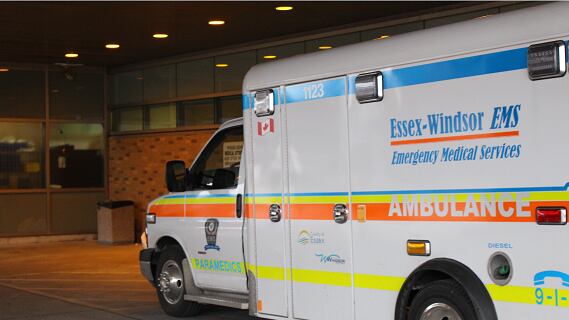
The head of the union representing paramedics with Essex-Windsor EMS calls staffing issues that resulted in ambulances being off the road an ongoing problem, 'but yesterday was slightly worse than normal.'
CUPE 2974 President James Jovanovic told AM800's Mornings with Mike and Meg that they had ambulances off the road Thursday during the day and in the evening because there aren't enough paramedics to staff them.
Jovanovic says when an ambulance is down staffed, there are fewer units available when someone calls 911, which can increase wait times for the next emergency.
He says paramedics across Ontario are leaving the profession faster than they're entering it, and they're being treated as second-tier emergency responders.
"We're paid approximately 20 per cent across the province less than police and fire. We have the highest entry-level requirements of any emergency responder. There is not enough incentive to enter into the profession when you can go make 20 per cent more elsewhere. We don't have enough mental health supports compared to police and fire as well," he says.
Jovanovic says they're short around 50 paramedics just to maintain their current level of service, and we have to plan for the future as well.
"We have an increasing population; we have an aging population. We know that we need to expand our service, if anything. But also, as far as giving our current paramedics the proper time off, rest, and recovery time, we don't have enough to backfill," he says.
CUPE 2974 represents around 320 paramedics with Essex-Windsor EMS who voted in mid-February 100 per cent in favour of strike action to back contract demands, with the main issues focused on recruitment, retention, wages, and burnout impacting members.
On February 24, the union applied for a provincially appointed conciliator to assist the union and the County of Essex in reaching a mutually acceptable settlement.
The current collective agreement remains in effect until March 31, 2026, but under provincial labour legislation, several procedural steps must occur before any work disruption can take place.
The union is expected to meet with the Ontario Labour Relations Board in mid-April to discuss what strike action may or could look like based on their Essential Ambulance Services Agreement.
While EMS is deemed an essential service, there could be a reduction of service rather than a full strike.
The County of Essex has previously stated they remain committed to reaching a fair and fiscally responsible agreement.