
They say, “Good fences make good neighbours.”
The City of Windsor has a new framework to help residents settle any neighbour disputes over the cost of repairs or replacement of a fence.
During Monday’s meeting, the council voted to exempt the municipality from the Line Fences Act, an Ontario law that helps resolve disputes between neighbouring property owners about boundary fences that had local officials, known as ‘fence viewers,’ being brought in to mediate the dispute.
Under the previous system, the city would have to appoint four staff members, usually property standards or bylaw enforcement officers, to collect evidence and review each owner’s perspective before making a judgement.
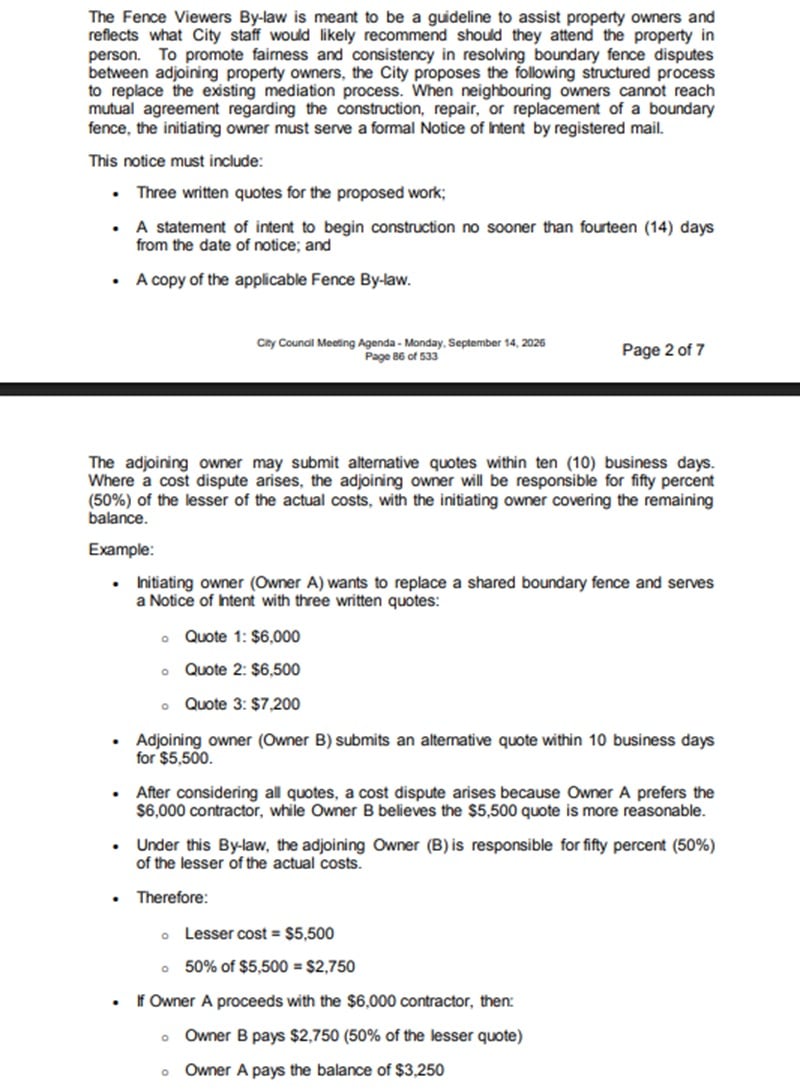
In its place, the council has voted to eliminate the need for local staff to be called out and is replacing it with a non-binding guideline that neighbours can use to settle any dispute while providing transparency, equity, and legal recourse through the Ontario courts.
Deputy Chief Building Official Brandon Calleja says this isn’t set up as a legal mechanism for people to resolve fence disputes.
“If they still want to go through the Ontario courts for a simple case because they couldn’t resolve it using the framework that we’ve provided, that’s still fine. That’s their prerogative if they like to go through the legal route. This is hoping to mitigate those issues within fence disputes with property owners,” he says.
Calleja says if neighbours can act reasonably, this guide could help them solve a lot of fence disputes without hiring legal representation.
“It sets out a clear expectation of what each fence owner would have to pay on a neighbour dispute should the city get involved, like we used to under the Line Fences Act,” he says.
Calleja says the number one message is to be a good neighbour and have a conversation because some things like fences can be expensive.
“Understanding that your neighbour may be in a different financial standing than you are as a property owner,” he says.“ Trying to come to a resolution civilly among neighbours, understanding those issues may exist, and this framework could certainly go a long way into helping the roles and responsibilities of owners.”
The new system would allow both sides in the dispute to provide several quotes and counter-quotes for service.
There’s also a framework for how much each neighbour would be required to pay for the final cost if there is a dispute over the preferred option should one property owner wish to move ahead without an agreement.