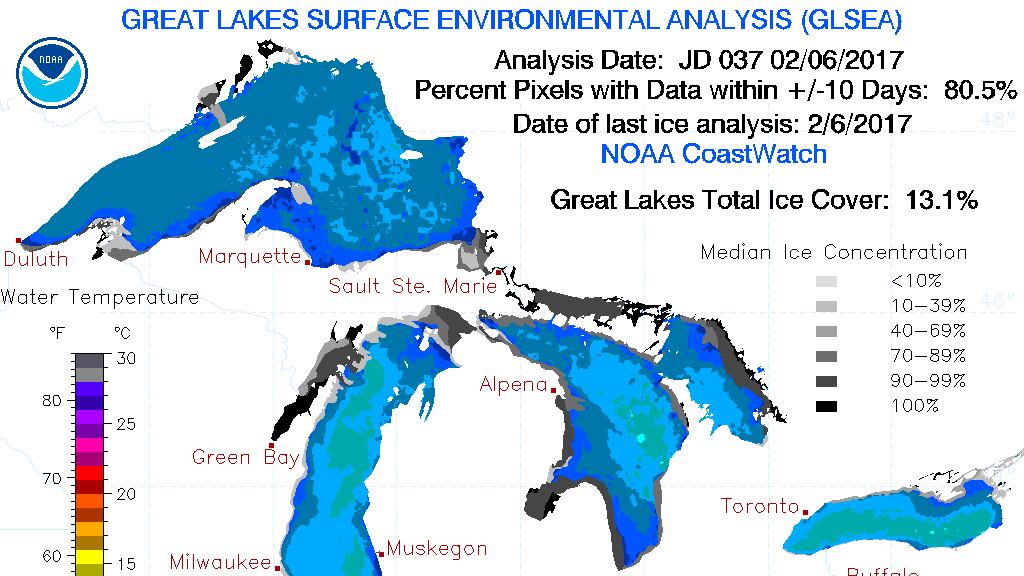
Unusually low ice coverage of the Great Lakes likely to lead to weather impacts for many months.
There's been a radical shift in the amount of ice coverage on the Great lakes over the last 2 years.
In 2014-15 the lakes were almost entirely covered in ice as a result of 2 winters of Polar Vortex conditions.
But this winter is very different with a milder December and January.
Ice coverage is only at about 13 % and with the current spell of warmer weather it could decline to single digits.
Scott Sutherland is a Meteorologist and Science Writer at the Weather Network who has been tracking the trend.
He says we could feel the impact suddenly with lake-effect snow triggered by west or northwest wind pulling moisture from the open water and causing streamers from Lake Huron and Lake Michigan.
Sutherland says less ice means higher levels of evaporation from the lakes this winter which is likely to mean lower water levels in the lakes this summer.
He says we could also be in for a muggy and stormy summer: "with all the open water that heat will go directly into the water and will warm up the lakes even more you'll get even more evaporation enhancing storms and so forth. But you're going to have that big reservoir of heat so when night comes and the lakes start venting heat into the air through the summer we're not going to have a lot of relief"
Sutherland says the lake temperature is unusually warm for early February ranging from 2 to 5 Celsius.
Sutherland says this radical a shift in ice coverage is another indicator of climate change.