A decision to restrict crossing the Canada-U.S. border to combat the coronavirus is being applauded by officials in Windsor.
Prime Minister Justin Trudeau announced Wednesday morning the Canada-United States border will be restricted and non-essential travel will not be permitted.
Trade will not be impacted, but tourism will be.
Director of the Cross Border Institute at the University of Windsor Dr. Bill Anderson, is glad it is a co-ordinated effort between both countries and the rules will be consistent going in both directions.
Anderson says a disruption to truck traffic would be devastating to both economies, potentially in the long-term.
"They are going to allow the freight movements, the trucks to continue moving and I think that is the most important thing in terms of minimizing the economic impact of this," he says.
Anderson says this will help reduce the risk of exposure, but it won't stop it.
"I don't think there's much rationale in the sense that we are going to be more threatened of infection from somebody from Michigan than we would from somebody locally," he says. "But it seems that the policy and the idea of social distancing policy, part of it is to keep people from moving around so much."
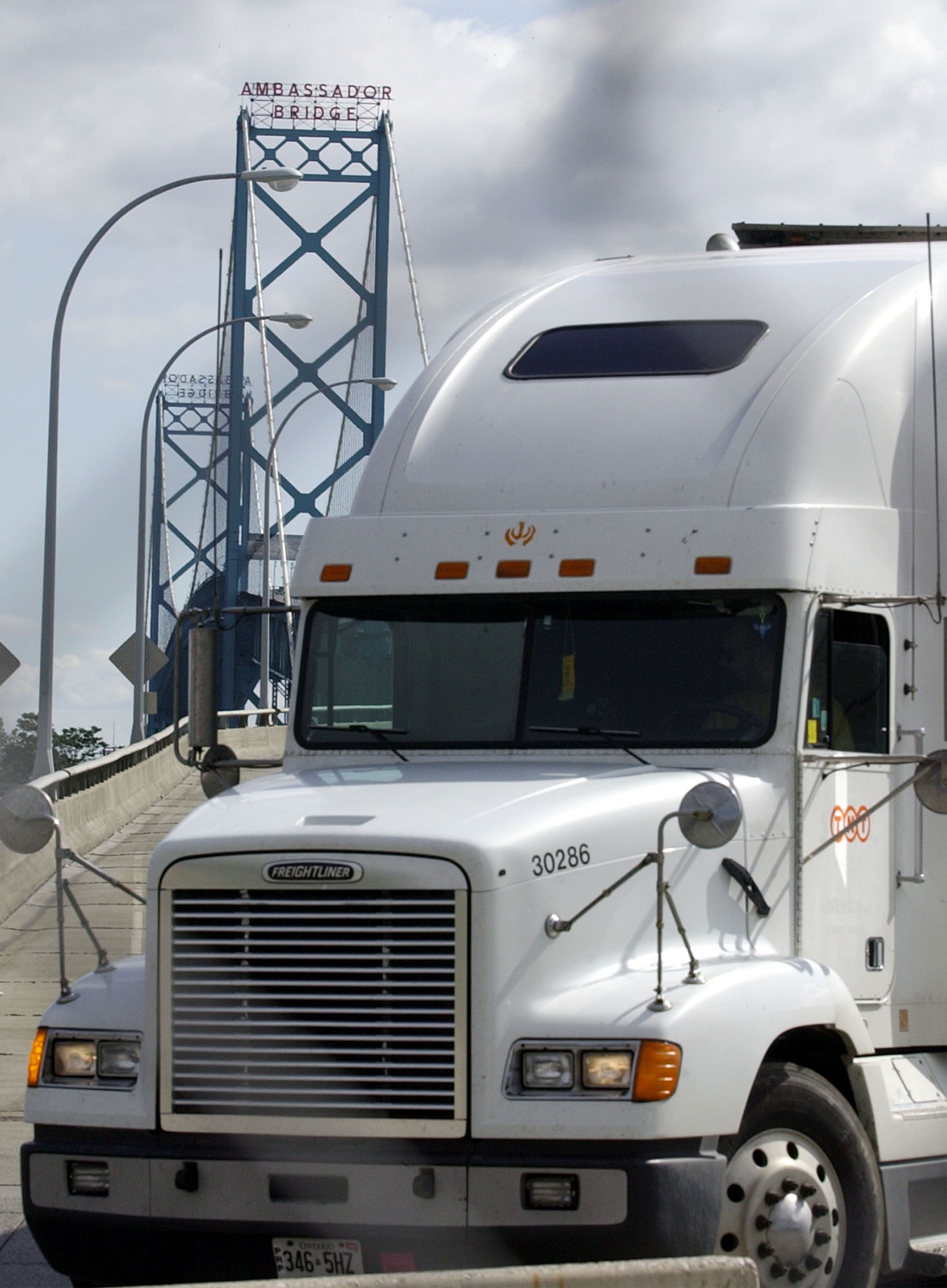
A truck heads to US customs after crossing the Ambassador Bridge linking Windsor and Detroit. (Photo by Jeff Kowalsky/AFP/Getty Images)
CEO of Tourism Windsor-Essex-Pelee Island, Gordon Orr, says this move is bigger than tourism, as we are dealing with a global pandemic.
He says tourism recognizes that Canada needs to flatten the curve and lessen the spread of COVID-19.
Orr says this is shock to the system.
"I never thought I'd say this, but for the first time we are encouraging tourists not to come across the border and visit Windsor-Essex," he says.
Orr says tourists in the U.S need to stay home.
"We have ceased all marketing efforts at present time, recognizing that once we are out of this and through it, we are going to amplify our messages and at that point in time and amplify our marketing and make sure we get out there and welcome them back and remind them of their wonderful tourism experiences."
Trucks will continue to cross the border to deliver food, fuel and medicine, and essential workers like health-care professionals who live and work on opposite sides will also be permitted to cross.
Exemptions will remain in place so Canadians who are now in the United States can return home.