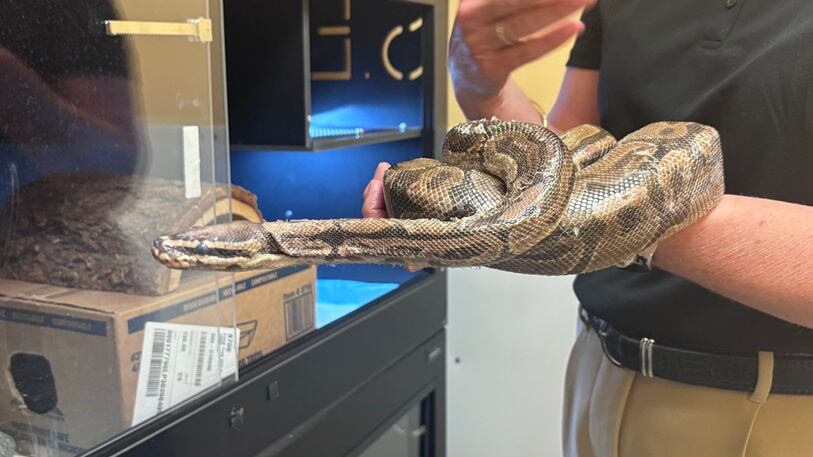
A routine inspection at a Windsor sewage plant quickly became a life-saving event for a 3.5-foot-long ball python.
The snake was found at the Little River Pollution Control Plant by Jeff Miller, a chief operator who makes the rounds at the plant as part of his regular duties to search for abnormalities and issues.
During a search on Friday, Miller found the ball python inside a bin which is the first screening of the process when the influent comes in from the sewer system.
Fortunately, there wasn’t a significant amount of recent rainwater coursing through the system, which could have killed the snake. So far, there’s no confirmation on how the snake ended up at the plant.
For now, the snake is on the mend at the Windsor-Essex County Humane Society.
The owner of the snake named ‘Peanut’ has come forward and the pair will be reunited Wednesday.
Ed Valdez, Executive Director of Pollution Control for the City of Windsor, says the snake was lucky to be alive.
“I wasn’t surprised until I saw what kind of snake it was and the size of it. We have seen small snakes infiltrate into the plant, but seeing the size of that one, it was quite a surprise.”
He says how it got into the sewer collection system is unknown.
“I’m guessing it came in through one of the curbside catch basins. I doubt that it came through somebody’s toilet, in my opinion. So how it got to the catch basin is a number of different ways, it could have escaped from somebody’s backyard, inside their house, inside a cage, inside a car perhaps.”
Meanwhile, Lynnette Bain, Executive Director at the Humane Society, says the snake is comfortable being held.
“I really think that this was a case of an escape artist here of this one getting out of someone’s home or enclosure. So you can see we keep locks on our enclosures because they’re pretty smart at getting out and they’re very strong. So they can fit through the smallest crevice that you couldn’t even believe.”
She says due to dehydration and damage to the scales, the shedding process has been more difficult.
“We keep their enclosure anywhere from 87 to 91 degrees Fahrenheit, and they need certain humidity levels as well. So that’s a pretty controlled environment that you need to maintain within those temperature ranges and humidity levels. So a sewer or pollution control grate is not ideal.”